Description
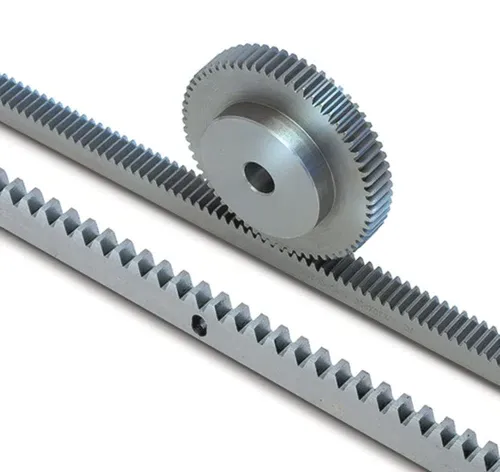 When it comes to vehicle handling, safety, and long-term reliability, few mechanical components carry as much responsibility as the gear rack at the heart of a rack and pinion steering assembly. Gear racks for automobiles are the precision-machined backbone of modern steering design — translating the rotational motion of the steering wheel into the controlled, lateral linear displacement that turns the front wheels with millimetre accuracy. From compact hatchbacks navigating London’s congested streets to heavy commercial lorries traversing the M6, these components operate silently under high stress, temperature fluctuation, and relentless vibration every single day.
In the United Kingdom, the automotive manufacturing and aftermarket sector represents one of the most demanding procurement environments in Europe. British OEM facilities, tier-one Midlands suppliers, and independent fleet service centres all require automotive gear racks that meet exacting dimensional tolerances, demonstrate proven corrosion resistance in the UK’s salt-laden winter road conditions, and arrive on tight delivery schedules without quality compromise. The growing adoption of electric power steering across new UK-registered vehicles — now approaching 95% of new passenger car registrations — has raised the precision bar even further, because EPS systems amplify every dimensional imperfection in the rack rather than dampening it.
Ever Power brings over 18 years of hands-on application engineering experience to every gear rack project. With ISO 9001-certified manufacturing, a deep catalogue of standard and custom configurations, and a responsive UK-facing technical support team, Ever Power has become the supplier of choice for engineers and procurement professionals who need reliable, accurate, and competitively priced steering components. Whether you are specifying for a new EV platform, sourcing fleet replacement stock, or developing a motorsport prototype, this guide covers the complete technical landscape of gear racks for automobiles — from working principles and material science through to installation best practices and supplier selection criteria.
How the Rack and Pinion Steering System Works
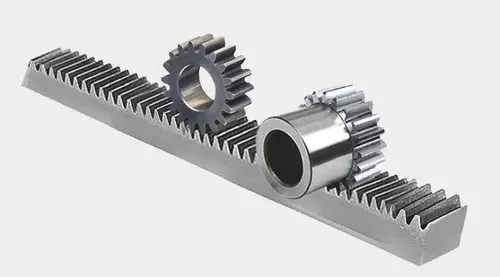
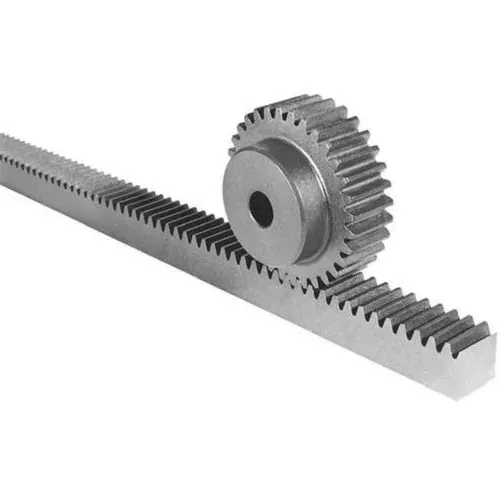
The automotive gear rack operates at the centre of a rack and pinion assembly — one of the most mechanically efficient mechanisms ever devised for converting rotary motion into linear displacement. The rack is a precision-machined steel bar, typically 600–1,200 mm in total length for a passenger vehicle, along whose working face a row of uniformly spaced teeth is cut to tight tolerance grades. These teeth mesh directly with a small circular pinion gear fixed to the base of the steering column, creating a positive, low-backlash mechanical connection between the driver’s input and the front wheels.
As the driver turns the steering wheel, torque travels down the column shaft to the pinion. The rotation of the pinion forces each successive rack tooth to advance, displacing the rack laterally left or right within the sealed steering housing bore. Adjustable tie rods bolted to each end of the rack transmit this linear travel to the steering knuckles at the front wheel hubs, causing the wheels to pivot around their king-pin axes and steer the vehicle in the intended direction. The entire mechanism contains very few moving parts, which is one of the principal reasons rack and pinion remains the dominant steering geometry for passenger and light commercial vehicles worldwide.
Modern UK vehicles increasingly use electric power steering (EPS), either rack-mounted (R-EPS) or column-mounted (C-EPS). In an R-EPS arrangement, the electric motor drives the rack directly via a ball-screw or belt-driven mechanism, making the dimensional accuracy and surface finish of the gear rack critically important to noise, vibration, and harshness (NVH) performance. A rack with surface irregularities of even a few microns in tooth pitch will generate vibration pulses at the steering wheel — perceptible to the driver and measurable on NVH test rigs. This is why precision matters far more in modern EPS-equipped vehicles than in the hydraulic power steering era.
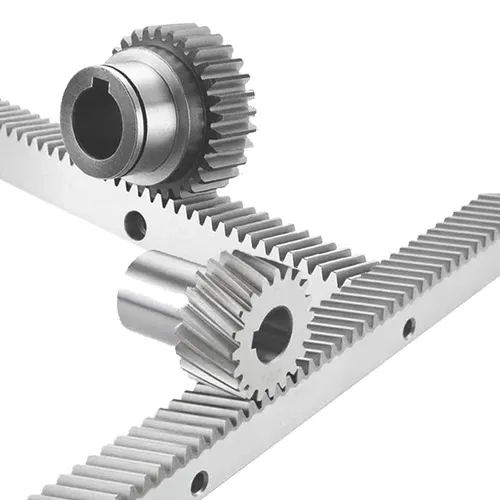
Technical Specifications at a Glance
| Parameter | Standard Catalogue | Custom Engineering | Unit |
|---|---|---|---|
| Module (Pitch) | 1 – 5 | 0.5 – 12 | mm |
| Rack Length | 500 – 1,200 | 100 – 3,000 | mm |
| Tooth Profile | Spur (straight) | Helical / Spur / Variable-ratio | — |
| Material Grade | C45 / 45# Steel | 40Cr, 42CrMo4, Stainless, Nylon | — |
| Surface Treatment | Black Oxide | Zinc Plate / Hard Chrome / Nitriding | — |
| Pressure Angle | 20 degrees | 14.5 – 25 degrees | degrees |
| DIN Accuracy Grade | DIN 8 – DIN 7 | DIN 6 – DIN 4 | — |
| Max Load Capacity | up to 5,000 | up to 30,000 | N |
| Surface Hardness (induction) | 50 – 55 | 50 – 62 | HRC |
| Operating Temperature | -20 to +120 | -40 to +200 | deg C |
Material Science & Construction Quality
Carbon Steel — C45 / 45# (Standard)
The workhorse material for standard passenger car and light commercial steering racks in the UK market. C45 carbon steel offers a tensile strength of 600–800 MPa, excellent machinability, and a well-understood heat-treatment response. Induction hardening of the tooth flanks raises surface hardness to 50–55 HRC, extending service life dramatically without embrittling the rack core. The combination of cost efficiency, consistent supply chain availability, and proven automotive service history makes C45 the default specification for OEM production volumes and fleet replacement programmes across England, Scotland, and Wales.
Alloy Steel — 40Cr / 42CrMo4 (Premium)
Step-up material for SUVs, 4×4 off-road platforms, heavy vans, and emergency service vehicles operating on UK roads. The chromium-molybdenum chemistry of 42CrMo4 elevates both core toughness and surface hardenability. Gas nitriding treatment applied to these alloy racks achieves surface hardness beyond 60 HRC while retaining a ductile, impact-resistant core — ideal for the combined demands of a blue-light response vehicle or a high-mileage NHS ambulance covering both urban and rural routes across the United Kingdom. Corrosion resistance is also significantly superior to plain carbon steel, reducing the risk of in-service failure caused by the salt and moisture exposure typical on British winter roads.
Stainless Steel & Engineering Polymers (Specialist)
Stainless steel gear racks are specified where maximum corrosion immunity is non-negotiable — for instance, in coastal emergency vehicle fleets or specialist marine-use automotive platforms. Engineering polymer racks in high-performance nylon or acetal grades are used in lightweight low-load steering systems where noise reduction and weight saving are the dominant priorities, such as certain battery electric micro-vehicle platforms currently in development at UK innovation hubs. Ever Power’s engineering team will assess your application data and recommend the most suitable material specification before committing to manufacture.
Eight Reasons UK Engineers Choose Ever Power Gear Racks
Precise, Direct Steering Response
The direct tooth-to-tooth meshing of a rack and pinion delivers immediate, proportional steering feedback with no lost motion. Tight DIN tolerance grades eliminate unwanted backlash, giving drivers precise vehicle control whether navigating London roundabouts, Yorkshire moorland roads, or high-speed motorway lane changes. Consistent centre-feel and lock-to-lock linearity are critical for active safety systems including lane-keeping assist and autonomous emergency steering.
Exceptional Long-Term Durability
Induction-hardened tooth flanks combined with corrosion-resistant surface finishes give Ever Power automotive racks a service life that routinely exceeds 150,000 km in real-world UK fleet testing. The use of verified raw material grades with traceable mill certificates ensures batch-to-batch consistency that catalogue-buying from unaudited sources simply cannot guarantee. Fewer premature failures mean lower whole-life maintenance costs for UK fleet operators.
High Mechanical Efficiency
Rack and pinion systems transfer steering input with minimal friction loss — typically achieving mechanical efficiency above 90%. In electric power steering configurations, which now dominate new UK vehicle registrations due to CO2 efficiency legislation, reduced parasitic drag from a precision-finished gear rack translates directly into lower energy draw, fewer charging cycles for EV fleets, and improved WLTP range figures on type approval tests.
Compact, Space-Saving Package
The slender profile of a gear rack allows vehicle designers to maximise engine bay space and optimise frontal crash structure geometry. This packaging advantage is especially valuable in modern front-wheel-drive platforms, battery-electric vehicles where the front axle motor and inverter compete for space, and small commercial vans where cargo floor area is a commercial priority. Ever Power supplies custom rack cross-section profiles to fit unusually constrained housings.
Competitive Cost of Ownership
The straightforward geometry of a rack and pinion design means lower unit manufacturing costs, readily available replacement parts, and faster workshop labour times compared to recirculating ball steering gear. For UK fleet managers facing rising workshop rates across the South East, Midlands, and North of England, a lower cost-per-vehicle-per-year on steering maintenance is a genuinely decisive procurement factor when choosing between suppliers at tender stage.
Broad System Compatibility
Ever Power automotive gear racks are engineered to be fully compatible with manual, hydraulic power-assisted, and electric power steering systems across a wide range of vehicle platforms. Custom mounting flange geometry, specific bore diameters, and bespoke tie-rod interfaces are designed to drawing, making drop-in replacement straightforward for both new-build vehicle programmes and scheduled overhaul of existing steering assemblies in UK fleet maintenance depots.
Full Quality Documentation
Every gear rack shipment from Ever Power is accompanied by a dimensional inspection report, material test certificate (MTC), and — for custom orders — a full first-article inspection report (FAIR) traceable to the customer’s drawing revision. ISO 9001 certification covers the entire production and inspection process. UK tier-one and OEM customers operating within IATF 16949 supply chains can request additional documentation packages at the quotation stage.
Proven Global Track Record
Over 18 years supplying automotive, industrial, and specialist vehicle manufacturers across Europe, Asia, and North America gives Ever Power a depth of application knowledge that is genuinely difficult for newer or smaller suppliers to match. That accumulated field experience — covering thousands of vehicle types, operating environments, and failure mode analyses — informs every design decision made on customer projects, from initial material selection through to final surface treatment specification.
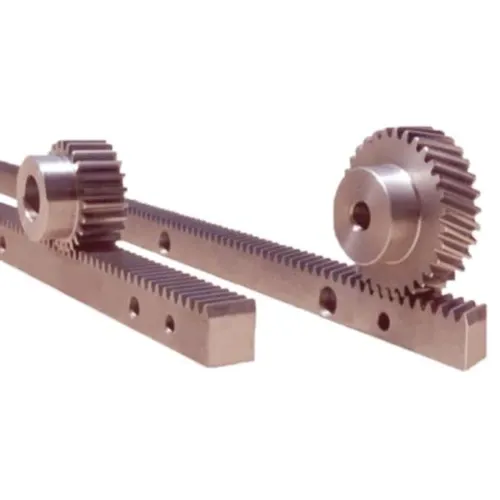
Application Scenarios: Gear Racks Across the UK Automotive Sector
The versatility of the rack and pinion mechanism means that precision-engineered gear racks for automobiles appear across an exceptionally wide spectrum of vehicle categories and applications throughout the United Kingdom. Understanding which specification is best suited to each scenario reduces warranty risk, simplifies preventive maintenance programmes, and ensures compliance with UK and European road safety and type approval legislation.
🚗 Passenger Cars & City Vehicles
Compact spur-tooth racks in C45 steel with protective black oxide finish form the standard specification for the vast majority of British-built and European-import passenger cars sold in the UK. They deliver the precise, low-effort steering feel demanded by modern drivers — particularly important in dense urban environments like London, Bristol, Edinburgh, and Manchester where tight turning manoeuvres are frequent and driver fatigue from heavy steering would be a serious concern. EPS-compatible versions with helical tooth profiles are available for premium segment vehicles where NVH quality is a marketing differentiator.
🚐 Commercial Vans & Light Goods Vehicles
Delivery vans and light commercial vehicles covering 50,000 to 80,000 miles annually on UK roads require automotive gear racks with enhanced load ratings and superior fatigue resistance. Module 3 or module 4 alloy steel racks with induction-hardened teeth are the typical specification for this segment. UK logistics companies and last-mile delivery operators managing large van fleets benefit directly from consistent part numbers, predictable service intervals, and ready replacement stock that Ever Power can maintain in European buffer inventory.
🚙 SUVs & 4×4 Off-Road Vehicles
Sport utility vehicles and off-road platforms operating on UK country roads, green lanes, agricultural access tracks, and moorland terrain demand higher tooth strength, elevated impact resistance, and superior corrosion immunity. Helical tooth profiles in 42CrMo4 alloy steel with gas nitriding are the preferred specification for this category — combining lower operating noise, higher dynamic load capacity, and outstanding corrosion protection in the wet, muddy, and salt-exposed environments routinely encountered by 4×4 users across the Scottish Highlands, Welsh hills, and North of England countryside.
⚡ Battery Electric Vehicles (BEV)
As the UK progresses toward its Zero Emission Vehicle mandate — requiring 80% of new car sales to be zero-emission by 2030 — BEV platform engineers increasingly specify gear racks optimised for rack-mounted EPS systems. Lightweight alloy constructions, DIN 6 tooth accuracy, and low-friction surface coatings all contribute directly to range extension. Ever Power supplies purpose-designed BEV steering racks to several UK and European EV development programmes, including prototype-stage and pre-series production quantities with accelerated tooling timelines.
🏎 Performance & Motorsport Applications
UK motorsport engineering firms — from Formula Student university teams at institutions like Loughborough, Bath, and Oxford Brookes, through to professional GT and sportscar racing outfits — source custom quick-ratio gear racks requiring optimised lock-to-lock ratios for specific track geometries. Ever Power produces these high-precision motorsport components to DIN 4 accuracy grade in premium alloy steel with hard chrome or PVD coatings, capable of withstanding continuous high-load steering cycles under demanding race conditions.
🚑 Emergency Service & Blue-Light Vehicles
Police, ambulance, and fire service vehicles operated across the UK’s 43 police constabularies and NHS Ambulance Trusts place extreme demands on all steering components due to round-the-clock operational cycles, heavy payload variations, and high-speed deployment requirements. Heavy-duty gear racks with maximum fatigue ratings, comprehensive corrosion protection packages, and full material traceability documentation are specified for blue-light procurement frameworks. Ever Power’s supply capability and quality documentation standards are designed to meet public sector contract requirements.
How to Select the Right Automotive Gear Rack
Selecting the correct gear rack for your automotive application is not a catalogue exercise where the cheapest available part simply gets fitted. The procurement engineer must systematically balance load capacity, dimensional envelope, material chemistry, accuracy grade, surface treatment, and compatibility with the existing steering assembly — all while managing unit cost and delivery lead time.
STEP 1 — Define Load Requirements
Calculate maximum lateral force based on vehicle gross weight, tyre footprint, and power steering amplification factor. Add a 25% safety margin to arrive at your design load. From this figure, the required module size and material grade follow directly from standard gear tooth load capacity formulae (DIN 3990 / ISO 6336).
STEP 2 — Confirm Dimensional Envelope
Measure housing bore diameter, mounting centre distances, and tie-rod interface geometry before finalising the rack specification. A rack exceeding the housing bore by even 0.2 mm will cause binding; one that is too short will have insufficient lock-to-lock travel. Ever Power provides native STEP files of all standard catalogue items for customer design review.
STEP 3 — Assess Operating Environment
UK vehicles face salt, moisture, mud, and temperature cycling from sub-zero Scottish winters to 35 deg C+ under-bonnet summer temperatures. Select surface treatments accordingly: zinc plating for moderate environments, hard chrome for severe corrosion exposure, gas nitriding for applications requiring both surface hardness and corrosion resistance without dimensional penalty from thick coating layers.
STEP 4 — Choose Accuracy Grade
For standard manual or hydraulic power steering: DIN 8-7 is typically adequate. For EPS-equipped passenger cars and light commercial vehicles: DIN 7-6 is recommended. For performance, motorsport, or premium EV applications where NVH targets are stringent: DIN 6-4 accuracy should be specified. Higher accuracy grades incur additional machining cost but pay back in reduced warranty claims and superior product positioning.
Customer Success Story
TransFleet UK Ltd — Coventry, West Midlands
Third-Party Logistics & Last-Mile Delivery | 340-vehicle mixed van and light commercial fleet
The Challenge
TransFleet UK was experiencing steering rack failures on a portion of their Ford Transit-based delivery fleet at an average of 78,000 miles — well below the targeted 120,000-mile service interval. A root cause investigation identified premature corrosion at the tie-rod thread interface combined with surface pitting on the rack teeth, driven by inadequate original equipment corrosion protection in the high-humidity depot environments common across Coventry and the wider West Midlands region.
The Solution
Ever Power’s application engineering team reviewed TransFleet’s fleet usage data and proposed a drop-in replacement automotive gear rack machined from 40Cr alloy steel with a dual-stage surface treatment — phosphate under-layer plus hard chrome on the rack body, with a zinc-nickel coating on the tie-rod interface threads. Components were produced to DIN 7 accuracy with a mounting envelope fully compatible with the existing OEM steering housing, requiring zero vehicle modifications to install.
The Results
After 18 months in service across 80 trial vehicles, covering an average of 42,000 miles each under daily multi-drop delivery conditions, zero steering rack failures were recorded. Full fleet rollout proceeded across all 340 vehicles in Q2. TransFleet estimated annual savings of approximately £68,000 in unplanned workshop downtime and parts replacement costs. The supply agreement has since been extended to cover front axle pinion gears as well.
Verified Customer Reviews
“We switched to Ever Power gear racks for our light commercial vehicle fleet operating out of our Birmingham depot. The build quality is noticeably superior to the OEM replacements we were using — no play, no noise, and they have held up perfectly through 14 months of intensive daily multi-drop deliveries across the West Midlands. An excellent product from a supplier that actually understands fleet requirements.”
James Thornton — Fleet Technical Manager
Thornton Haulage Ltd, Birmingham, UK
“As a chassis engineer developing a lightweight EV platform, I needed a helical gear rack capable of handling the torque profile of our rack-mounted EPS motor with minimal backlash and excellent NVH performance. Ever Power’s team turned around a custom prototype in three weeks, complete with full CMM inspection documentation and STEP models. Technically outstanding from first enquiry through to production approval.”
Dr Sarah Patel — Senior Chassis Engineer
GreenDrive Automotive Engineering, Oxford, UK
“We source steering components for several UK specialist vehicle builders and Ever Power has become our preferred supplier for custom automotive gear racks. Competitive pricing, reliable delivery to our Northamptonshire warehouse, and — crucially — dimensional consistency that is rock-solid batch after batch. That repeatability is what separates a genuinely good supplier from the rest, and it keeps our production line running without headaches.”
Mark Griffiths — Procurement Director
Midlands Precision Parts Ltd, Northampton, UK
Ever Power: Manufacturing Capability & Custom Engineering
Ever Power operates state-of-the-art manufacturing facilities equipped with CNC gear hobbing machines, profile grinding centres, and automated quality inspection systems including coordinate measuring machines (CMM) and optical tooth profile analysers capable of measuring flank form errors to sub-micron resolution. Every automotive gear rack that leaves the factory undergoes a full dimensional inspection against the customer’s drawing, and first-article inspection reports (FAIR) are provided as standard for all new part numbers entering production. ISO 9001 quality management certification covers every production stage, from incoming raw material verification and chemical analysis through in-process dimensional checks to final despatch audit.
What genuinely distinguishes Ever Power from catalogue-only suppliers is deep custom engineering capability. The in-house design team develops bespoke gear rack configurations from customer-supplied specification sheets, 2D engineering drawings, or 3D CAD models in any major format (STEP, IGES, Parasolid). Customisation services include non-standard module and tooth profile design, variable-ratio rack geometry for enhanced on-centre steering feel and reduced lock-to-lock turns, specialist surface treatments not available from standard catalogue items, bespoke end-machining for unique tie-rod or housing interfaces, and full serialisation and laser marking for part traceability within regulated supply chains.
For UK customers, Ever Power maintains a dedicated European logistics arrangement with typical door-to-door transit times of 5–8 working days for standard catalogue items. Custom-engineered parts are produced within 3–5 weeks depending on material availability and processing complexity. Prototype and sample orders for development programmes can often be expedited — send your drawing and timeline requirements directly to the sales engineering team to discuss feasibility.
18+
Years Application Engineering Experience
DIN 4
Finest Achievable Accuracy Grade
ISO
9001 Certified Production & Inspection
5–8
Working Day UK Delivery — Standard Items
100%
Dimensional Inspection Every Batch
Installation & Maintenance Best Practices
Correct installation is as important as component quality in determining the service life of any automotive gear rack. Vehicles should be raised on a workshop lift with the front wheels hanging freely before beginning rack removal or installation work. Where an existing rack is being replaced, the steering wheel must be centred and locked before disconnecting the tie rods — this preserves the vehicle’s tracking geometry reference point and prevents the clock spring from being damaged. All fasteners securing the rack to its mounting brackets must be torqued in sequence to the manufacturer’s specified values; under-torqued rack mounting bolts are a leading cause of premature rack wear through micro-vibration-induced fretting at the mounting interface. After installation, a full steering geometry alignment — including toe, castor, and camber — must be carried out at a suitably equipped UK workshop before the vehicle is returned to service.
Lubrication practice is critical and frequently misunderstood. Most sealed automotive rack assemblies are packed with lithium-complex or synthetic grease during manufacture at Ever Power and operate reliably for the full service interval without re-greasing. However, if the protective rubber bellows are found to be torn, collapsed, or incorrectly seated during a routine inspection — admitting road dirt, moisture, or salt spray into the rack bore — the assembly should be removed promptly, inspected for corrosion or scoring, thoroughly cleaned, re-greased with a compatible lubricant specification, and fitted with new bellows before reinstallation. Using an incorrect lubricant containing incompatible additives can cause seal swelling and accelerate corrosion far beyond the original failure mode.
Preventive maintenance for UK fleets and high-mileage vehicles should include a visual inspection of bellows integrity at every scheduled service interval, a check for steering play or unusual steering effort at every MOT, and immediate workshop investigation of any clunking, grating, or groaning noise encountered during low-speed lock-to-lock manoeuvring. Catching and resolving minor wear or damage early prevents the kind of progressive failures that lead to an MOT rejection for excessive steering play, costly emergency roadside breakdowns, or, in the worst case, a safety-critical steering failure at speed. The cost of proactive maintenance is invariably a fraction of the cost of reactive repair and vehicle downtime.