Description
Construction & Industrial Engineering
Gear Racks for Construction Lifting Elevators: The Backbone of Vertical Transport on UK Building Sites
A deep-dive into how precision-engineered rack and pinion gear systems keep personnel and materials moving safely at height — from scaffolded high-rises in London to infrastructure projects across England, Scotland and Wales.
Walk past any active construction site in the UK — a tower block going up in Manchester, a new hospital wing in Birmingham, or a commercial redevelopment in Edinburgh — and you will almost certainly see a construction hoist climbing the face of the structure. Inside that hoist, doing the real mechanical work, is a rack and pinion drive system. The gear rack is not a glamorous component. It sits exposed to weather, dust, concrete slurry and mechanical shock, yet it must perform flawlessly on every single cycle, because the moment it doesn’t, people and materials are at risk. Understanding why high-quality gear racks for construction lifting elevators matter, what separates a good one from a substandard one, and how to specify the right product for a given project is knowledge that every site engineer, procurement manager and equipment hire company in Britain genuinely needs.
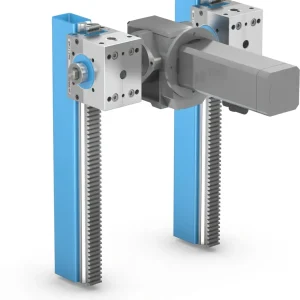
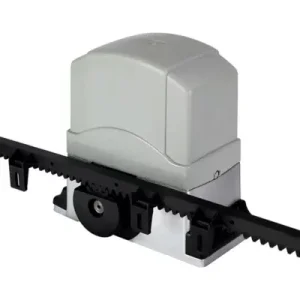
The rack and pinion mechanism used in construction hoists converts the rotary motion of an electric motor into controlled linear vertical travel. A toothed steel rack is fixed to the mast structure, and a driven pinion gear — mounted on the car’s drive assembly — meshes with that rack to push the platform up or lower it in a predictable, controllable way. Unlike cable-driven lifts, there are no ropes to stretch, fray or snap, which is one reason rack and pinion hoist systems are the dominant choice for temporary construction access worldwide. The performance of the entire system hinges on the quality of the gear rack: its dimensional accuracy, tooth profile precision, material hardness, and surface treatment all directly affect load capacity, noise, service life and, above all, safety.
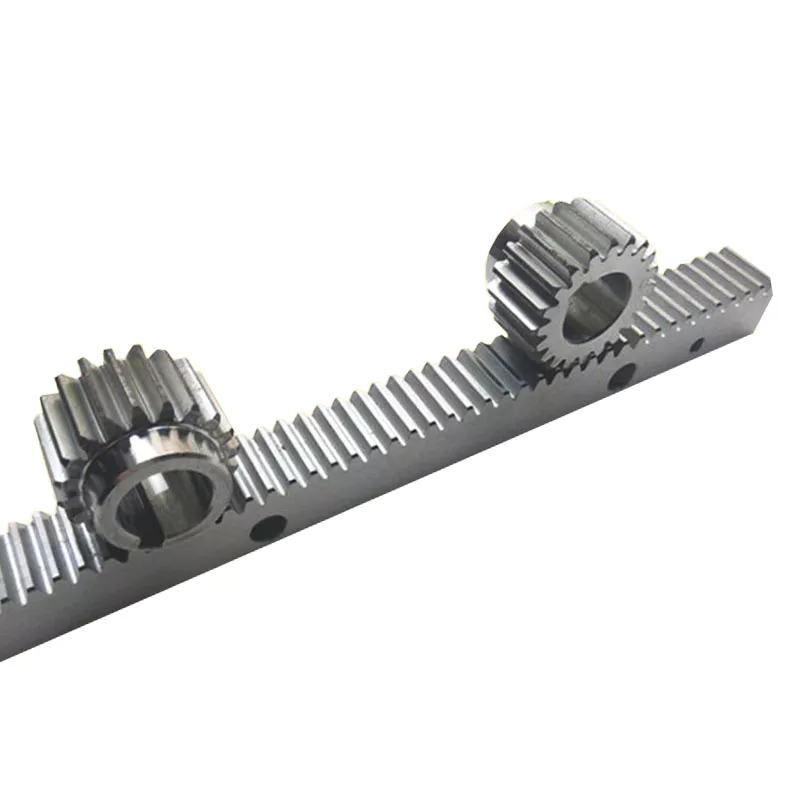
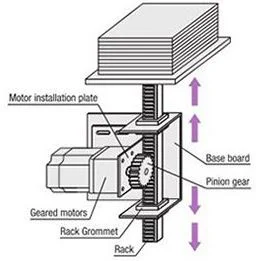
How the Rack and Pinion Drive Actually Works in a Construction Hoist
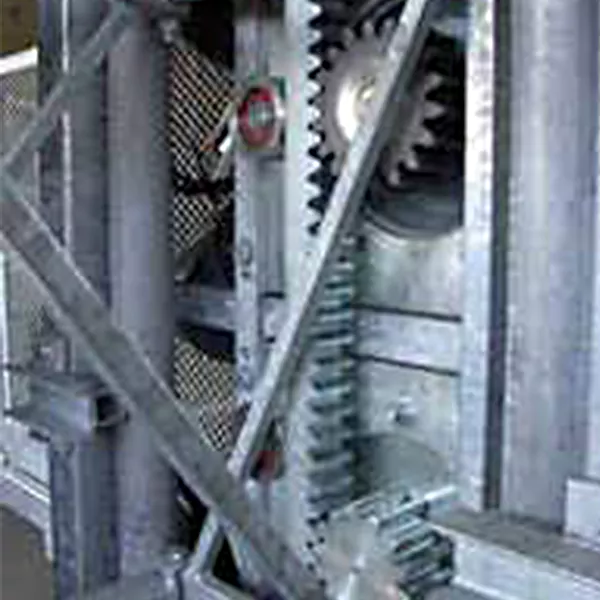
The working principle is elegant in its simplicity, but demanding in its tolerances. A series of gear rack sections — each typically 1 metre in length — are bolted end-to-end along the full height of the hoist mast. The car’s drive unit contains one or more electric motors, each coupled through a gearbox to a hardened steel pinion. As the motors turn, the pinion teeth engage the rack teeth in sequence, generating a thrust force that propels the car upward or, under controlled braking, allows a smooth descent.
What makes this system fundamentally different from a cable hoist is the positive mechanical engagement. At no point is the load suspended from a tensioned rope. The car literally climbs the mast by gripping it. This means that even if power is cut completely, the car does not free-fall — the rack and pinion geometry, combined with electromagnetic or mechanical brakes, holds the platform securely in position. For UK sites operating under the Lifting Operations and Lifting Equipment Regulations 1998 (LOLER) and the Provision and Use of Work Equipment Regulations 1998 (PUWER), this inherent mechanical fail-safety is a significant compliance advantage.
Modern construction hoists typically use helical gear racks rather than straight-cut spur racks. Helical teeth engage progressively across their width, distributing load more evenly, reducing impact noise, and allowing higher travel speeds without vibration. On a 120-metre tower hoist running at 1 m/s with a 3,200 kg payload, the difference in smoothness between a DIN 6 helical rack and a poor-quality spur rack is immediately perceptible — and so is the difference in rack wear after 100,000 cycles.
Material Choice, Heat Treatment and Manufacturing Standards
The material specification of a gear rack for construction lifts is not something to economise on. Construction site environments in the United Kingdom are unforgiving: persistent rainfall, road salt, concrete alkalinity, and the mechanical impact of multi-tonne loads cycling thousands of times per year. A rack manufactured from substandard bar stock, inadequately heat-treated, will develop surface fatigue, pitting and tooth wear in a fraction of the time that a correctly specified component will last.
The most widely used base material for construction hoist gear racks is medium-carbon alloy steel — typically grades equivalent to 42CrMo4 or 20CrMnTi — which offers the right balance of core toughness and surface hardenability. After rough machining, the rack goes through carburising and quenching (for case-hardened parts requiring a tough core) or through-hardening and tempering for uniform hardness through the section. Surface hardness targets of 55–60 HRC at the tooth flanks are normal for heavy-duty hoist applications, with a case depth sufficient to prevent the hardened layer from spalling under repeated contact stress.
Following heat treatment, precision grinding of the tooth profile and pitch is essential. The dimensional accuracy of the rack — specifically the pitch error, tooth profile deviation, and lead variation — determines how smoothly the pinion travels and how evenly load is shared between teeth in mesh. DIN 5 or DIN 6 accuracy grades are the accepted benchmarks for construction hoist racks, and reputable manufacturers will provide inspection certificates traceable to calibrated measuring equipment. Zinc plating or hot-dip galvanising is routinely applied to the rack body (excluding tooth flanks) to resist the British weather.
Technical Specifications — Construction Lifting Elevator Gear Racks
| Parameter | Standard Range | Custom Options Available |
|---|---|---|
| Module (M) | 0.4 M – 30 M | Non-standard modules on request |
| Tooth Type | Helical / Spur (straight) | Custom helix angles |
| Accuracy Grade | DIN 5, DIN 6, DIN 8 | DIN 4 for high-precision hoists |
| Surface Hardness | 35 – 60 HRC | Tooth-only hardening available |
| Material | Alloy steel, carbon steel, stainless | Cast steel, forged steel, nylon |
| Heat Treatment | Carburising & quenching, Q&T | High-frequency induction hardening |
| Surface Treatment | Zinc plating, nickel plating, black oxidation | Hot-dip galvanising, plastic coating |
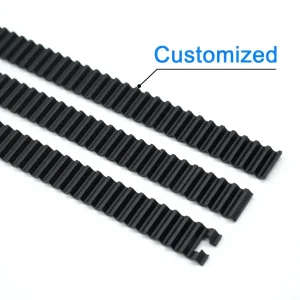
| Section Length | Standard 1,000 mm per section | Custom lengths to 6,000 mm |
| Quality Certification | ISO 9001, SGS, CTI, RoHS | Material certs & inspection reports |
| Outer Diameter | Up to 6,000 mm | Bespoke large-diameter racks |
Why Quality Gear Racks Make a Measurable Difference on Site
Consistent Tooth Pitch Accuracy
Pitch errors accumulate along the mast height. Even a 0.05 mm cumulative pitch error per section can cause audible knocking and accelerated pinion wear over a 100-metre run. DIN 5 ground racks eliminate this entirely.
Extended Service Life
A properly hardened alloy steel rack running against a compatible pinion on a well-lubricated mast can typically achieve 5–8 years of service on busy UK construction sites before requiring replacement, dramatically reducing lifecycle costs.
Noise Reduction
Urban construction sites in London, Manchester and other UK cities face increasing pressure from local planning authorities regarding noise. Helical gear racks are demonstrably quieter than straight-cut alternatives, reducing community friction and complaints.
Weather Resistance
Zinc-plated or galvanised rack bodies resist the corrosive combination of rain, construction chemicals and coastal salt air that gear racks endure on British building sites. Surface protection directly translates into reduced maintenance frequency and replacement spend.
Load Capacity Confidence
The tensile and fatigue strength of the rack steel directly governs the rated payload of the hoist. Using certified, traceable alloy steel with proper heat treatment ensures your system’s load rating is genuinely achievable — not just a number on a data sheet.
Drop-in Compatibility
Racks produced to consistent DIN tolerances are interchangeable across hoist makes and models. This simplifies maintenance logistics considerably — site managers can hold a small stock of replacement sections rather than source OEM parts during a critical project phase.
Where Construction Hoist Gear Racks Are Used Across the UK
The application base for construction lifting elevator gear racks in Britain is broader than many people realise. The obvious use case is the familiar single or twin-cage personnel hoist seen on residential tower blocks and commercial high-rises. These typically run at travel speeds of 0.65 m/s to 1.2 m/s, carry up to 2,000 kg per cage, and may operate continuously for 12 hours a day through a project lasting several years. At these duty cycles, the rack accumulates millions of tooth engagement cycles, and material fatigue resistance is the dominant design consideration.
Material hoists — used to transport concrete blocks, formwork panels, steel reinforcing bars, and mechanical plant — are if anything harder on gear racks than personnel hoists, because their loads are denser, more unevenly distributed, and often applied with a degree of impact. Infrastructure projects such as bridge construction, dam repair works, tunnelling ventilation shaft access, and offshore wind turbine installation all use rack and pinion hoists, often in remote or coastal locations where corrosion protection is paramount. Several large infrastructure programmes across England, Scotland and Wales — including rail upgrades, coastal flood defence works and energy plant construction — have used helical gear racks manufactured to the specifications described in this article.
Renovation and refurbishment projects present their own specific demands. A Victorian-era warehouse conversion in Bristol or a listed building facade restoration in Edinburgh requires a hoist that can be installed without permanent structural modification, that generates minimal vibration which might damage historic fabric, and that can be removed cleanly on completion. For these projects, the ability to source rack sections in non-standard lengths, and to obtain mast anchoring hardware manufactured to the same tolerances as the rack, matters greatly. Bespoke manufacturing capability is often the deciding factor in supplier selection for this type of work.
| Application | Typical Module | Key Requirement | Recommended Grade |
|---|---|---|---|
| Personnel hoist, tower blocks | M8 – M12 | Smooth ride, low noise | DIN 5 Helical |
| Material hoist, heavy loads | M10 – M16 | High load capacity, impact resistance | DIN 6 Helical, 58 HRC |
| Offshore/coastal projects | M8 – M14 | Corrosion protection | Stainless steel / hot-dip galv |
| Bridge & infrastructure works | M10 – M20 | Long rack runs, fatigue life | DIN 5 Ground, alloy steel |
| Heritage building refurbishment | M6 – M10 | Low vibration, bespoke length | Custom DIN 5 Helical |
| Industrial plant & energy | M12 – M30 | Extreme duty, long service | Forged alloy, DIN 5 |
Customer Success: Mixed-Use Redevelopment, London Docklands
“We specified M10 helical gear racks from Ever Power for six twin-cage hoists on a 32-storey residential tower in the London Docklands. The project ran for 28 months, with each hoist averaging over 200 cycles per day. Not one rack section required mid-project replacement. The dimensional consistency made installation and periodic mast extension straightforward, and the zinc-plated finish handled the Thames estuary environment without any rust creep. We have since specified the same product on two further schemes in Leeds and Bristol.”
— Project Director, Major UK Hoist Hire & Lifting Contractor, London
32-storey residential tower, Docklands, London | 28-month contract | 6 twin-cage hoists | M10 DIN 5 Helical Racks
The scenario described above is not unusual. The UK hoist hire sector — dominated by a mix of national companies and regional specialists — has become increasingly specific in its gear rack procurement over the past decade. Years of experience with cheaper, poorly-toleranced racks that required unplanned mid-project replacement have convinced most procurement teams that the per-section price premium of a certified, precision-ground rack is recovered many times over in avoided downtime and emergency procurement costs. On a large London development where a hoist stoppage can cascade into a programme delay costing tens of thousands of pounds per day, the case for premium gear racks is straightforward.
What Our Customers Say
❝
We have been sourcing gear racks for our fleet of SC200 and SC200G hoists for three years now. The DIN 6 helical racks are consistently on-spec, delivery to our Birmingham depot is reliable, and the technical support when we needed a custom section length for a bridge access platform was genuinely impressive.
Operations Manager — Midlands Hoist Services Ltd, Birmingham, UK
❝
We fitted stainless steel gear rack sections on a tidal energy installation off the west coast of Scotland. After 18 months of salt water exposure and continuous cycling, tooth wear measurement was well within acceptable limits. That kind of corrosion resistance is non-negotiable when your maintenance window is dictated by the tide.
Lead Mechanical Engineer — Scottish Offshore Energy Contractor, Aberdeen, UK
❝
Price versus quality is always a conversation in procurement, but after one bad experience with budget racks that developed pitch errors in six months, we moved to precision-ground M12 racks certified to DIN 5. The lifecycle cost comparison is not even close. These racks simply last, and the reduced noise has made a real difference on our Edinburgh city centre projects.
Procurement Director — Northern Lifts & Access, Edinburgh, UK
Manufacturing Capability & Bespoke Product Development
Ever Power operates a vertically integrated manufacturing facility equipped with CNC lathes, precision milling centres, gear shapers, CNC grinding machines, and a full in-house heat treatment facility including carburising furnaces and quenching baths. Measuring equipment traceable to national standards is used throughout production — including gear profile testers, CMM coordinate measuring machines, and surface hardness testers — with full inspection documentation available on request.
The capacity and technical depth to handle custom orders is a genuine differentiator. UK customers regularly request gear racks with non-standard module sizes to replace obsolete OEM parts, racks in cut lengths that don’t correspond to the standard 1-metre section, racks with compound surface treatments (for example, case-hardened tooth flanks on a hot-dip galvanised body), or racks manufactured in stainless steel for food-safe or high-corrosion environments. The engineering team works from customer drawings, or can assist in producing drawings from a sample or dimensional specification. Lead times for custom orders are typically discussed and agreed at the quotation stage, and the company maintains an export packaging standard appropriate for delivery to all UK ports and logistics hubs including Felixstowe, Tilbury and Southampton.
Quality is managed through an ISO 9001-certified quality management system with SGS third-party verification. Every gear rack passes through a defined inspection sequence covering raw material certificate verification, dimensional inspection post-machining, hardness testing post-heat treatment, and final profile inspection prior to despatch. This traceability matters to UK customers operating under LOLER, where the certifying body will ask for evidence of component quality during periodic hoist thorough examinations.
Specifying Gear Racks for Construction Hoists: A Practical Guide for UK Engineers
When specifying replacement or new-build gear racks for a construction hoist project in the UK, the starting point is always the hoist manufacturer’s original specification or the rating plate data. Module size, tooth type (helical or spur), helix angle, and the number of teeth per section are the primary parameters. These should be matched exactly; even a small deviation in module can cause interference with the existing pinion and mast hardware.
Beyond the basic geometry, the accuracy grade is the next decision point. DIN 5 is the appropriate minimum for any personnel hoist operating at speeds above 0.5 m/s. DIN 6 is acceptable for slower material hoists in relatively benign environments. DIN 8 racks should be considered a last resort for temporary or very low-duty applications only. For projects in coastal locations — from Aberdeen to Bristol and all around the Welsh and Scottish coasts — stainless steel or hot-dip galvanised rack sections should be specified from the outset, regardless of the additional cost; the alternative is accelerated corrosion leading to premature replacement.
UK site teams responsible for hoist maintenance should note that the rack-to-pinion backlash setting is a critical maintenance parameter. As racks wear, backlash increases; exceeding the manufacturer’s maximum backlash limit is a condition that should trigger rack replacement regardless of apparent visual condition. Monitoring backlash at each Planned Preventive Maintenance visit, and keeping records as required under LOLER’s thorough examination regime, is both a legal obligation and a practical early warning system for the rack approaching end of serviceable life.
Frequently Asked Questions
Ready to Source Precision Gear Racks for Your Next UK Construction Project?
Get in touch with our technical team for a quote on standard or custom gear rack sections, with full material certification and fast despatch to any UK delivery address.
📧 Get a Quote Now — [email protected]
Ever Power | ISO 9001 Certified | SGS Verified | DIN 5 / DIN 6 / DIN 8 Gear Racks | Serving the UK Construction Industry | edit by gzl