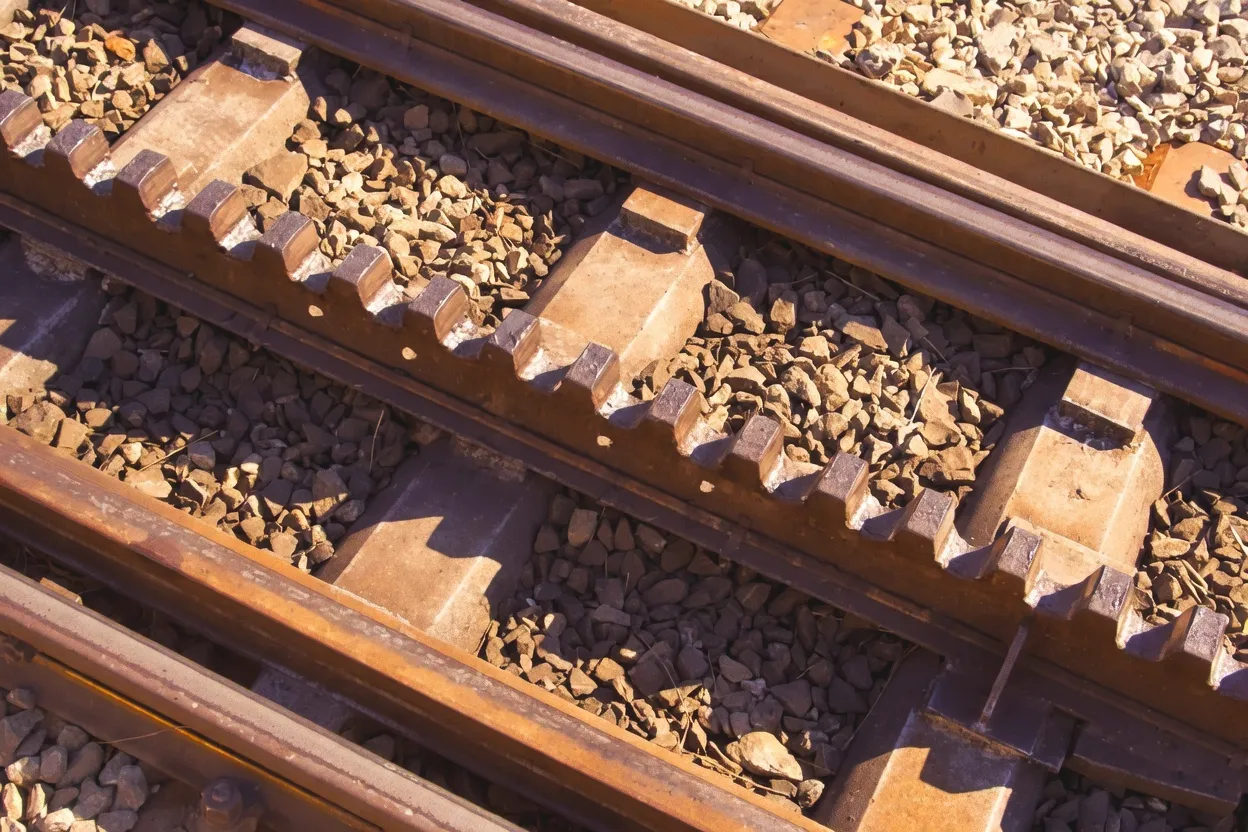
Rack railways — also called cog railways — represent one of the most mechanically demanding environments in rail engineering. Unlike conventional adhesion-based rail systems, rack railways depend entirely on the meshing engagement between a toothed rack laid along the track centre and a pinion gear mounted on the locomotive or car. This gear rack and pinion relationship is the sole mechanism responsible for propulsion, braking, and positional control on gradients that regularly exceed 25% — terrain where conventional wheel-on-rail friction simply cannot provide adequate traction or stopping force. The gear rack is not a secondary component in this system; it is the heart of the drive train.
At Ever Power, our engineering team has spent nearly two decades developing and supplying rack and pinion components for demanding industrial and transport applications. Our experience with steep-gradient rail, mountain tramway, and funicular projects across Europe means we understand the metallurgical, geometric, and safety requirements that rack railways impose. This article walks through the critical role gear racks play in rack railway design, the technical specifications that matter most, and how UK and international operators can source reliably engineered rack solutions with full customisation support.
How Gear Racks Function in Cog Railway Drive Systems
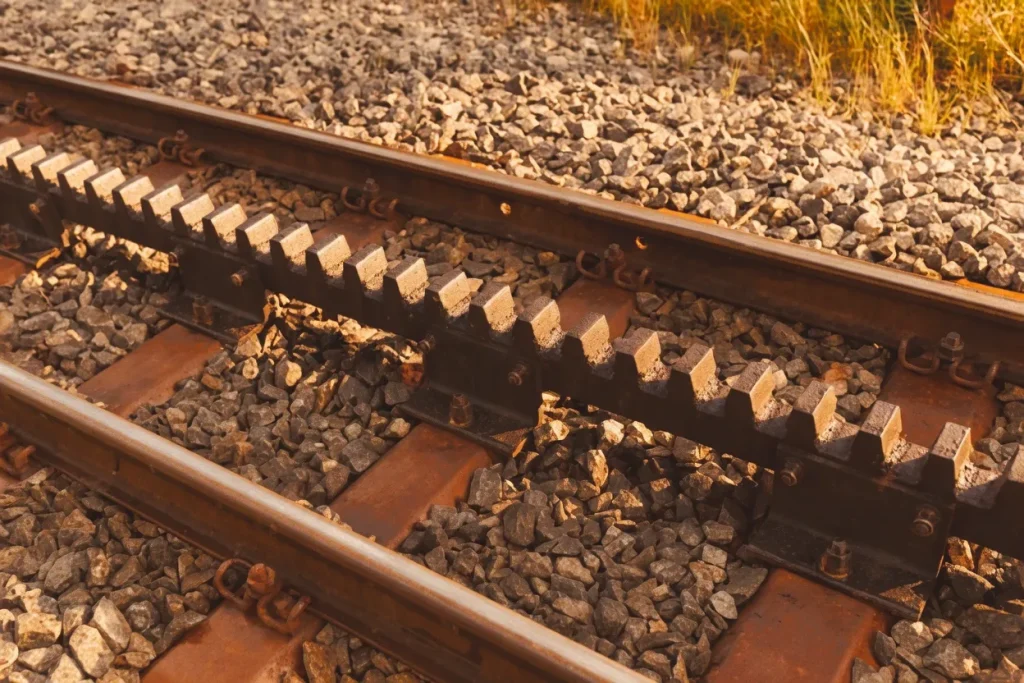 In a cog railway, the gear rack — a long toothed bar — is fixed centrally between the running rails along the full length of track. The onboard pinion, driven by electric motors or a hydraulic system, engages the rack teeth directly, converting rotational motor torque into linear tractive effort. This positive mechanical drive eliminates the risk of wheel slip under extreme load or wet conditions, which is critical when carrying passengers up gradients of 48% or more, as seen on famous lines like the Snowdon Mountain Railway in Wales or the Cairngorm funicular in Scotland.
The rack profile most commonly used in modern rack railways is the Abt rack system, which uses two or more offset toothed rails to ensure that at least one tooth is always fully engaged — eliminating the jerk and vibration associated with single-rack systems. The Riggenbach ladder rack and Strub rack are also used depending on gradient severity and load profile. Each system demands specific tooth geometry, pitch accuracy, and material integrity from the gear rack itself. A misaligned or worn tooth on the track rack can create impact loading that propagates fatigue cracks through both the rack and the pinion, so manufacturing precision and material quality are not negotiable.
Ever Power manufactures gear racks that conform to DIN 867 and ISO 1328 standards, with tooth pitch tolerances held to within 0.01 mm across the full rack length. Our ground racks for rack railway applications are available in module sizes from M4 to M20, helical or straight-tooth profiles, and in EN 1.6587 case-hardened alloy steel or EN 1.4462 duplex stainless for corrosion-exposed outdoor installations — essential for UK mountain and coastal railway environments.
Technical Specifications: Ever Power Rack Railway Gear Racks
Where Rack Railway Gear Racks Are Deployed
Mountain & Heritage Railways
Lines such as the Snowdon Mountain Railway in Wales and the Cairngorm funicular in Scotland rely on Abt-pattern racks installed in curved and straight sections. The rack must resist both the tensile load of a fully loaded car descending and the compressive braking forces applied at the pinion. Our alloy steel racks are heat treated to provide a tough core with a hard wear surface — the combination essential for long service intervals between inspection.
Construction Site Railways & Inclined Conveyors
Temporary and semi-permanent rack rail systems are used extensively on UK infrastructure projects — quarry haulage ramps, dam construction inclines, and coastal cliff site access. These applications demand fast installation with bolted rack segments and replaceable tooth sections. Ever Power supplies pre-drilled rack segments with matched fixing hardware optimised for site installation in British Standard track gauges.
Offshore Energy Platform Access
Rack and pinion drives on offshore access platforms — including those used at tidal energy and wind farm structures along the UK coastline — face a corrosive marine environment combined with dynamic loading from sea motion. Duplex stainless steel rack profiles from Ever Power provide the corrosion resistance of austenitic grades alongside the strength of ferritic steel, making them the preferred choice for North Sea installations where maintenance access is infrequent and rack replacement downtime is costly.
Tourist Funiculars & Cliff Railways
Cliff railways at coastal British resorts — including the East Cliff Railway in Bournemouth and the Babbacombe Cliff Railway in Torquay — use rack and pinion drives where hydraulic counterbalance is supplemented by toothed rack engagement on steep final approach sections. These installations cycle tens of thousands of passenger trips annually. Our rack segments are designed for in-situ replacement without full track shutdown, supporting the heritage operators’ goal of minimal service interruption during peak summer seasons.
Why Ever Power Gear Racks Outperform Off-the-Shelf Alternatives
Tooth Geometry
CNC hobbed and ground tooth flanks ensure consistent pitch across full rack length, minimising dynamic loads during engagement on curved track sections.
Material Traceability
Full material certificates, heat treatment records, and dimensional inspection reports supplied with every batch — essential for UK rail safety documentation requirements.
Custom Length Segments
Matched segment sets with precision-drilled joint faces eliminate pitch error at segment joints — the highest-stress zone in any rack railway track bed.
UK Climate Ready
Zinc-nickel and PTFE coating options resist the wet, freeze-thaw cycles common to exposed UK mountain and coastal rail environments, extending rack service life significantly.
Customer Success: Welsh Mountain Railway Rack Replacement Project
Client: A heritage rack railway operator in North Wales, UK — operating a 4.7 km tourist route on a mountain gradient of up to 33%, carrying approximately 140,000 passengers annually.
Challenge: The existing Abt-system rack segments — sourced from a European manufacturer in the 1990s — had developed uneven wear on the tooth flanks of several upper-gradient sections. Annual inspection revealed that pitch deviation at segment joints had exceeded the operator’s safety tolerance, requiring a phased replacement programme scheduled around the winter closure period.
Solution: Ever Power supplied 480 metres of matched M12 Abt-pattern rack in EN 1.6587 case-hardened steel. Each segment was finish-ground to DIN 5 accuracy, with co-ordinate measurement machine (CMM) reports provided per segment. The matched joint-drilling pattern allowed the client’s track maintenance team to achieve sub-0.015 mm pitch continuity across all joints without the need for specialist shimming. Segments were delivered in phased batches aligned to the client’s track access windows.
Outcome: The replacement programme was completed across three winter seasons with no unplanned service disruptions. Post-installation vibration monitoring showed a 38% reduction in rack-engagement noise at passenger speed, and the operator extended its scheduled rack inspection interval from 18 months to 30 months based on the observed wear rates.
“We’ve sourced rack segments from several European and Asian suppliers over the years. Ever Power’s dimensional consistency across the full batch was the best we have measured. The CMM reports saved us significant incoming inspection time.”
— Track Engineer, Heritage Mountain Railway, Wales, UK
“We needed rack for an offshore wind turbine access platform on a tight project schedule. Ever Power turned around a duplex stainless quotation within 24 hours and delivered the first batch inside four weeks. The corrosion performance after 18 months in the North Sea environment has been excellent.”
— Procurement Manager, Offshore Engineering Contractor, Aberdeen, Scotland
“Our cliff railway runs 365 days a year. When we needed like-for-like replacement rack for an original 1930s system, Ever Power reverse-engineered the tooth profile from our sample and produced a matched replacement set. The service is genuinely impressive for a component this specialised.”
— Operations Director, Coastal Funicular Railway, Torquay, England
Ever Power Manufacturing & Custom Engineering Capability
 Ever Power operates a dedicated gear rack production facility equipped with multi-axis CNC rack milling centres, continuous hobbing lines, case-hardening furnace cells, and a fully enclosed gear grinding department capable of achieving DIN 4 accuracy on racks up to 3000 mm in length. Our quality lab holds a Zeiss CMM system for full-profile measurement and issues traceable inspection reports conforming to ISO 9001:2015 requirements.
For rack railway and cog railway clients, our engineering team offers a complete customisation service: reverse engineering from worn or legacy rack samples, non-standard pitch and module specifications, custom tooth tip and root forms to match historic systems, bespoke drilling and fixing patterns, and matched segment sets with individual part serialisation for maintenance traceability. We support UK heritage rail operators, industrial incline specialists, and infrastructure contractors from first technical enquiry through to batch delivery — with no minimum order quantity on custom specifications for replacement projects. Whether you are maintaining an existing rack railway in the Lake District, specifying a new construction site incline in the Midlands, or upgrading a cliff railway on the English south coast, our team can develop the specification with you and quote on the same working day.
Frequently Asked Questions
© Ever Power | Precision Gear Rack Solutions for Rack Railways | UK Supply & Custom Engineering | [email protected]
edit by gzl