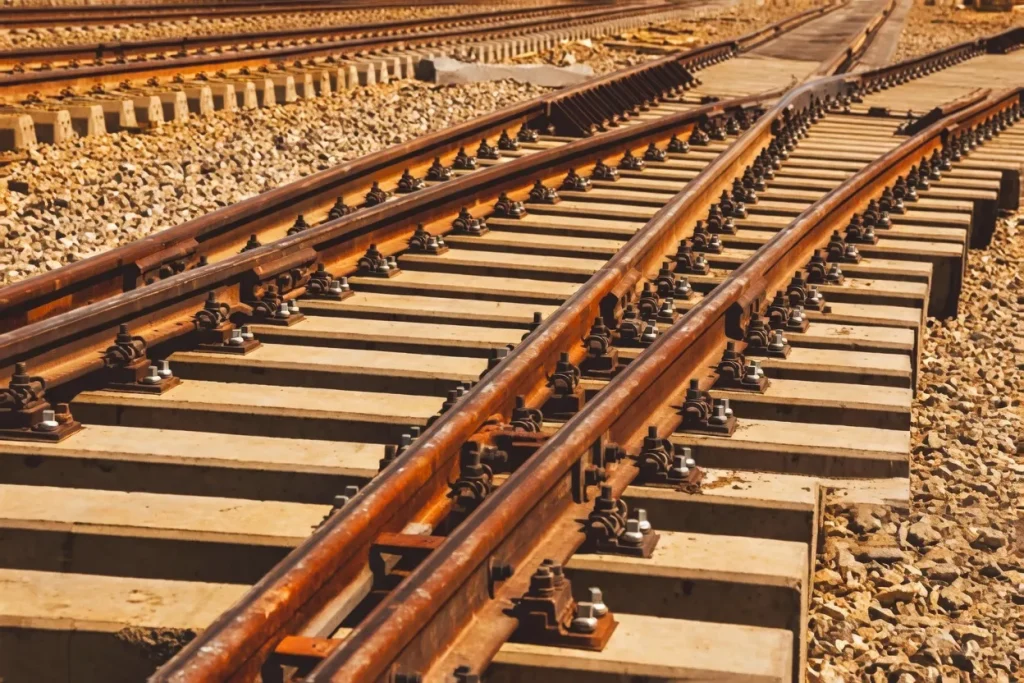
 Rack railways — also known as cog railways or rack-and-pinion railways — represent one of the most mechanically demanding applications in the entire rail industry. Unlike conventional adhesion railways that rely on friction between wheel and rail, rack railways use a toothed rack rail meshing directly with a drive pinion mounted beneath the locomotive or railcar. This fundamental shift in propulsion physics means the gear rack itself becomes the single most critical mechanical component on the entire track. Gradients of 25% and beyond, continuous load cycles lasting hours at a time, and exposure to alpine or coastal weather conditions — none of this is forgiving on poorly specified hardware.
At Ever Power, our engineering team has spent over 18 years working directly with rail operators, heritage railway trusts, and OEM vehicle builders to develop gear rack solutions that meet the precise mechanical, metallurgical, and dimensional tolerances that rack railway systems demand. This article explores the application in depth — covering traction mechanics, rack system types, material selection, and how to approach procurement for UK and international projects.
Ever Power precision gear racks manufactured for rack railway traction systems. Custom pitch, module, and material options available for OEM and retrofit projects.
How Rack Railway Traction Actually Works
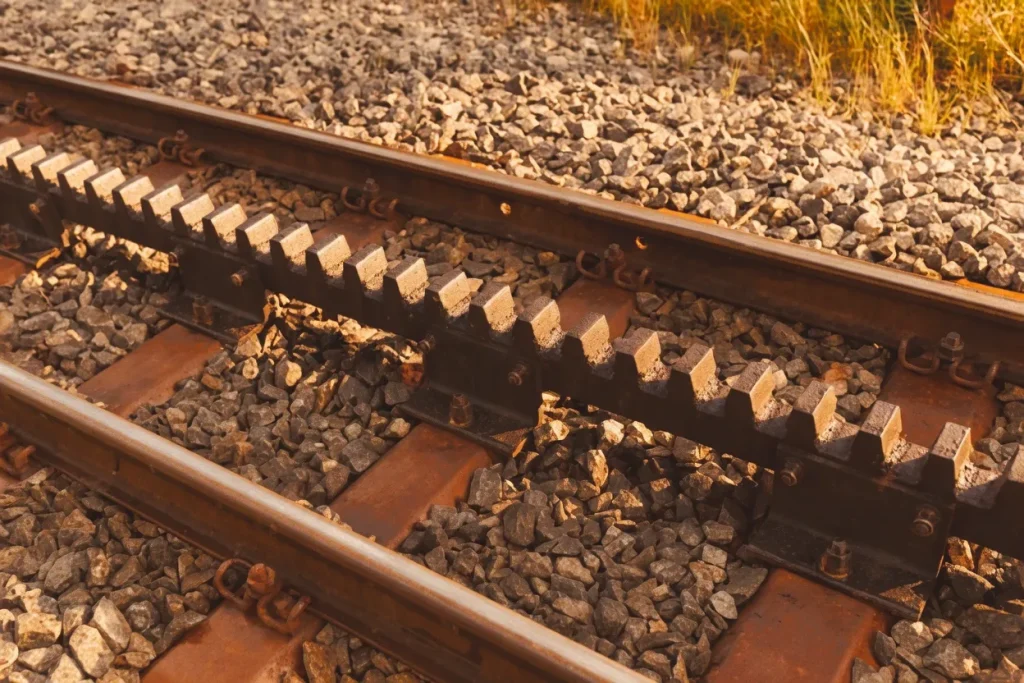 In a standard rack railway, a steel toothed rack is installed along the centre of the track between the running rails. The locomotive or multiple-unit carriage carries one or more drive pinions that engage this rack continuously during operation. Power is transmitted directly through tooth engagement rather than through adhesion, which is why cog railways can reliably climb gradients that would cause conventional trains to slip and stall. The Abt, Riggenbach, Strub, and Locher systems each arrange the rack teeth differently — flat-topped versus shaped, single rack versus double — but all of them share the same fundamental engineering requirement: every tooth profile must be machined to exacting tolerances because any cumulative pitch error across a track section translates directly into vibration, noise, and accelerated pinion wear.
The rack rail itself is typically manufactured in standard lengths — often 3 m or 4 m sections — bolted to a steel base plate or directly to sleepers, with carefully controlled joint gaps to allow for thermal expansion. In a mountain rail environment, temperature differentials between summer and winter can exceed 50°C, meaning thermal management of the rack joint geometry is a design consideration that sits right alongside tooth module selection and heat treatment specification. Getting any one of these wrong creates a service liability that is extremely difficult and expensive to rectify in situ.
Rack System Types and Their Engineering Characteristics
Material Selection, Heat Treatment and Technical Parameters
Railway-grade gear racks are not off-the-shelf catalogue items. The material specification begins with the operating load case — specifically the maximum vertical reaction force at the pinion contact point under emergency braking on the steepest gradient. For a loaded passenger car on a 25% gradient, this force is substantial, and it must be sustained not for a single cycle but for the entire operational lifetime of the rack section, which in well-maintained heritage and mountain railways can span several decades. The default specification for heavy-duty rack railway applications starts with medium-carbon alloy steel — typically 42CrMo4 or equivalent EN 10083 grades — followed by normalising, rough machining, induction hardening of the tooth flanks to 55–62 HRC surface hardness, and finish grinding to DIN 3962 tolerance class. Corrosion protection is applied as a zinc-rich primer with topcoat, though stainless-clad or weathering steel variants are available for exposed coastal or highland routes.
Where Gear Racks for Rack Railways Are Used in Practice
Mountain Heritage Railways
Snowdon Mountain Railway (Wales) and similar UK heritage lines require rack sections that match original Abt system dimensions while meeting modern safety certification. Replacement rack production for heritage operations is a significant segment of our custom manufacturing work.
Urban Funicular and Inclined Tram Systems
City funicular systems and steep urban tramways use rack sections on specific gradient zones. These applications demand high cycle counts and compact tooth profiles that integrate cleanly with existing infrastructure without major civil modification.
Industrial Rail Haulage on Steep Grades
Mining, quarrying, and heavy industrial sites sometimes use internal rack-guided rail systems for transporting heavy loads on inclines where standard rail haulage is impractical. The gear rack specification here focuses on shear resistance and tooth root strength under dynamic shock loading.
Coastal and Cliff Railways
The UK’s cliff railways — notably in Scarborough, Bournemouth, and Saltburn — operate in salt-laden environments with continuous moisture exposure. Gear rack material selection for these projects prioritises corrosion resistance and long inspection intervals to reduce maintenance overhead.
Why Ever Power Gear Racks Perform Better in Rail Service
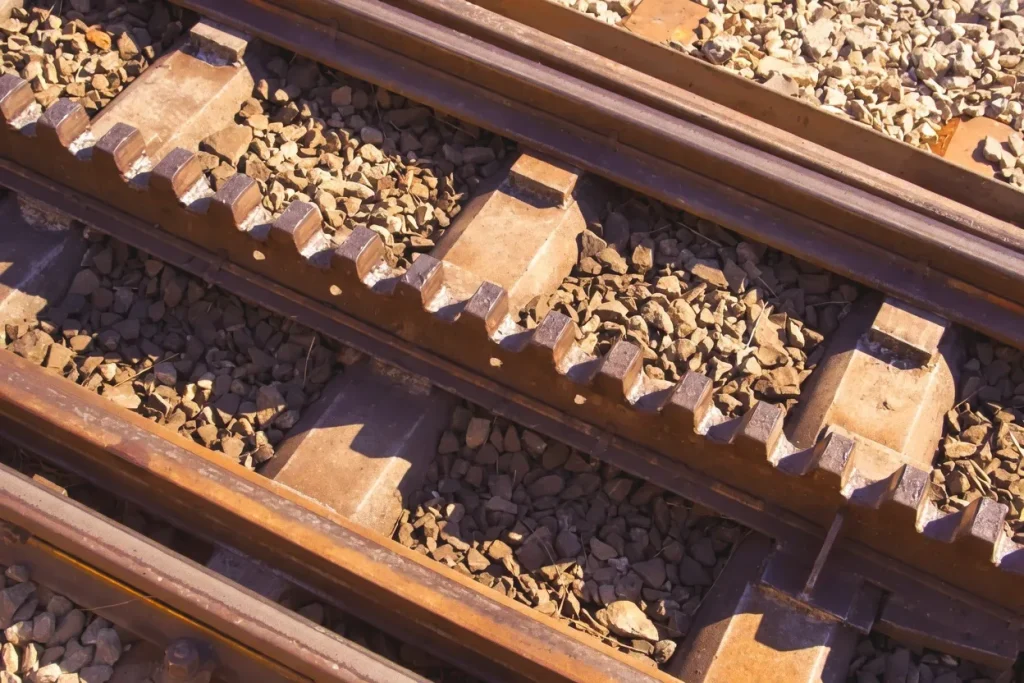 Railway procurement teams ask the same core question every time: how do we know this rack will last the designed service interval without unexpected failure? The answer comes down to three things — material consistency, machining accuracy, and the traceability of every step in between. At Ever Power, our rack rails for cog railway applications are manufactured from certified bar stock with full material test reports (MTRs), machined on CNC hobbing lines with in-process pitch accuracy verification, and subject to 100% tooth profile inspection before despatch. Every batch is accompanied by dimensional reports showing actual vs. nominal values for module, pitch, pressure angle, and tooth root radius.
Beyond the documentation, our engineering team provides application support at the specification stage — reviewing your gradient profile, axle load data, and operating speed range to calculate the minimum face width and required tooth hardness for the design life you’re targeting. This service is included as standard for any rack railway project enquiry, because getting the spec wrong at the beginning costs far more than any engineering consultation at the front end of the project.
Full MTR Traceability
Material certs and inspection reports included as standard with every order.
CNC Hobbed to DIN Class 5–6
High-precision tooth profiles verified by CMM for pitch and profile deviation.
Custom Length and Joint Design
Section lengths, joint geometry, and bolt patterns matched to your track design.
Application Engineering Support
Load calculations and material selection guidance before you place an order.
Customer Success: Welsh Heritage Mountain Railway Rack Replacement
A heritage narrow-gauge mountain railway operating in North Wales approached Ever Power in 2022 with an urgent replacement requirement. Two sections of their original Abt-system rack rail — installed in the 1970s — had developed progressive tooth wear beyond the service limit, creating a potential safety hold on operations during peak summer season. The challenge was dimensional: the original rack had been manufactured to a non-standard module that no longer appears in mainstream catalogues, and sourcing a direct replacement from European suppliers had already failed after several months of searching.
Ever Power’s engineering team reverse-engineered the tooth geometry from physical samples and engineering drawings provided by the railway’s infrastructure team. We confirmed the module, pressure angle, and addendum modification factor, then produced a complete manufacturing specification for 42CrMo4 alloy steel rack sections machined to the original dimensional envelope with induction-hardened flanks. A trial section was produced and shipped within six weeks, fitted and load-tested under supervision, and passed inspection. The full replacement order — covering both degraded sections plus one spare set — was completed and delivered within fourteen weeks of the initial enquiry. The railway returned to full timetable operation with no further delay.
Project: Heritage rack railway rack replacement — North Wales, UK, 2022–2023
“The reverse engineering process was handled with real professionalism. They matched our original rack geometry precisely, and the machining quality on the delivered sections was clearly better than the 1970s originals. We had zero fitting issues.”
— Infrastructure Manager, Heritage Mountain Railway, North Wales
“We source rack rail for an alpine tourism railway project in the Austrian Tyrol. Ever Power was the only supplier willing to work to our non-standard section length and provide DIN Class 6 certification with full inspection reports. Competitive on lead time too.”
— Project Engineer, Rail Infrastructure Contractor, Austria
“We needed a corrosion-resistant rack specification for a coastal cliff railway in the south of England. Ever Power proposed a hot-dip galvanised option with a sealed joint design that addressed our long-term maintenance concerns. The solution has performed well through two winters.”
— Operations Director, Coastal Visitor Railway, South England
Custom Manufacturing Capability: From Drawing to Delivered Rack
The rack railway sector rarely has the luxury of selecting from a standard catalogue. Every project involves a specific track gauge, rack system standard, gradient profile, and design life requirement that together determine a unique specification. Ever Power’s manufacturing facility is equipped to handle the full range of custom rack production requirements that rail projects demand — from prototype single sections for trial fitting through to multi-tonne production runs for full track installation or planned maintenance programmes.
Our CNC machining lines can accommodate gear racks from module m4 up to m20, in lengths up to 4,000 mm per section, with cross-sections from compact 40 × 40 mm profiles through to heavy 100 × 80 mm structural sections. Custom drilling patterns, countersunk bolt holes, end machining for butt-joint or fish-plate jointing, and co-ordinated batch numbering for installation sequence tracking are all available as standard production options. We also offer small-batch rapid prototyping for heritage restoration projects where a single non-standard profile needs to be recreated from scratch. Our custom service is a core capability, not an exception — we operate it routinely for customers across the UK, Europe, and internationally.
Frequently Asked Questions
FAQ Page Schema · Speakable Structured Data Ready
What module and tooth profile should I specify for an Abt system rack railway gear rack in the UK?
For most UK heritage Abt system applications, module m8 to m10 is the common starting range, though you should always verify against the existing pinion geometry. The pressure angle is typically 20° for modern replacements, but heritage lines may have 14.5° originals. We recommend sending us the existing pinion or drawings so we can confirm before quoting.
How long does it typically take to get a custom gear rack manufactured and delivered to a UK rack railway project?
Lead times depend on material availability, section size, and heat treatment requirements. For a standard custom specification using 42CrMo4 with induction hardening, typical production and delivery to the UK runs 8–14 weeks from drawing approval. Urgent heritage restoration projects can sometimes be expedited — contact us to discuss your timeline.
What is the approximate price per metre for a heavy-duty gear rack for cog railway use in the UK, and what factors affect the cost?
Pricing varies significantly with module, cross-section dimensions, material grade, heat treatment, and order quantity. Budget pricing for a custom-specification rack railway section typically starts from several hundred pounds per metre for small heritage quantities. Contact us at [email protected] for a project-specific quotation — we respond to all enquiries within one working day.
Which material is best for a gear rack used on a coastal cliff railway in England where salt corrosion is a concern?
For coastal UK cliff railway environments, we generally recommend hot-dip galvanised 42CrMo4 with sealed joint faces, or a stainless-clad tooth face variant for maximum corrosion resistance. The right choice depends on your maintenance interval targets and budget — we can model both options against your specific site conditions.
Where can UK rail engineers and heritage railway trusts find a reliable supplier for custom rack railway gear racks that are no longer in standard production?
Ever Power specialises in exactly this scenario. We routinely manufacture non-standard rack sections for heritage and specialist rail operators, reverse-engineering from physical samples or historical drawings when original specifications are unavailable. Enquiries are welcome from heritage railway trusts, infrastructure contractors, and OEM vehicle builders across the UK and internationally.
When should I consider upgrading from the original rack system standard to a modern tooth profile on a heritage rack railway?
Profile upgrades are worth considering when pinion replacement is already planned or when the original geometry can no longer be procured reliably. Transitioning to a modern standard module can improve parts availability significantly for future maintenance cycles. However, any profile change must be co-ordinated with the drive pinion and gearbox specification — this is a project-level decision and we can support your engineering team through the assessment.
Ever Power · Gear Rack Specialists · UK & International Supply
For rack railway gear rack enquiries, retrofit projects, heritage restoration, or custom specification support, contact our engineering team directly. We provide technical consultation at no charge for project enquiries.
Get a Quote — [email protected]
edit by gzl