Description
Plastic Gear Racks for Industrial Conveyor & Automation Systems
How MC Nylon & Engineering Plastic Rack Gears Are Transforming Conveyor Lines, Pick-and-Place Machines, and Linear Motion Systems Across British Manufacturing
In modern British manufacturing facilities — from automotive assembly lines in the West Midlands to food-processing plants in Yorkshire — the demand for reliable, corrosion-resistant linear motion components has never been more pressing. Plastic gear racks, particularly those produced from MC nylon, POM, and PEEK engineering polymers, have become the component of choice for design engineers who need to replace metal rack-and-pinion assemblies in environments where moisture, chemicals, or weight constraints make steel a liability rather than an asset.
Whether you are specifying a new conveyor system, retrofitting a pick-and-place robot arm, or designing a sliding door actuator for a cleanroom environment, the correct plastic gear rack delivers precision, longevity, and a dramatically reduced noise signature. Hangzhou Ever-Power Transmission Co., Ltd has spent nearly two decades engineering injection-moulded plastic racks and pinion gears that meet — and routinely exceed — the dimensional and mechanical expectations of global B2B buyers.
This article explores the engineering principles behind plastic gear racks, their real-world applications in conveyor and automation machinery, key material selection guidance, and the reasons why UK procurement teams are increasingly partnering with specialist Asian manufacturers for cost-effective, ISO-certified rack gear solutions.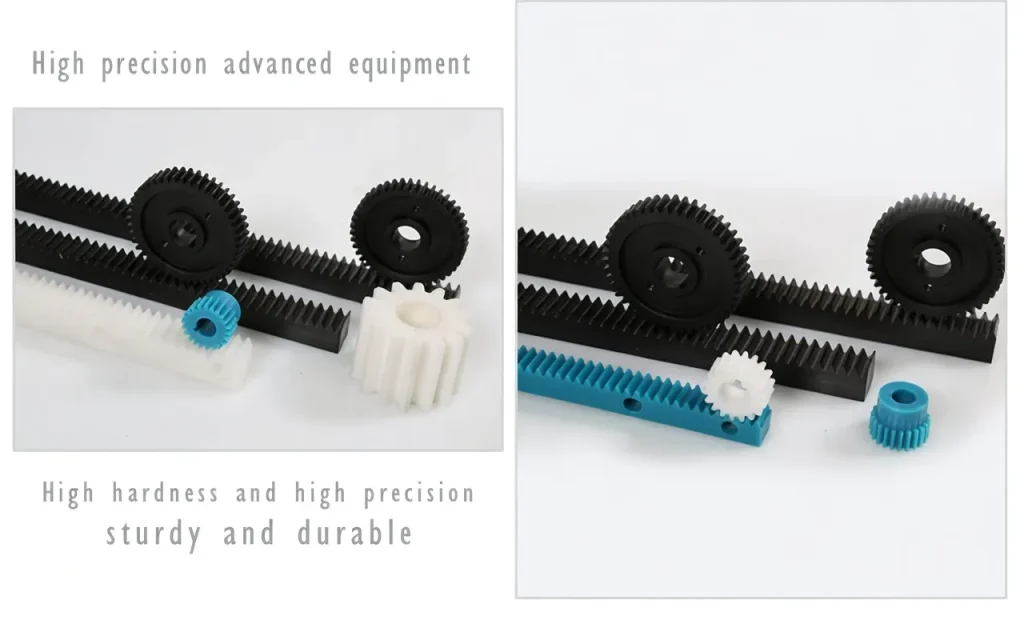
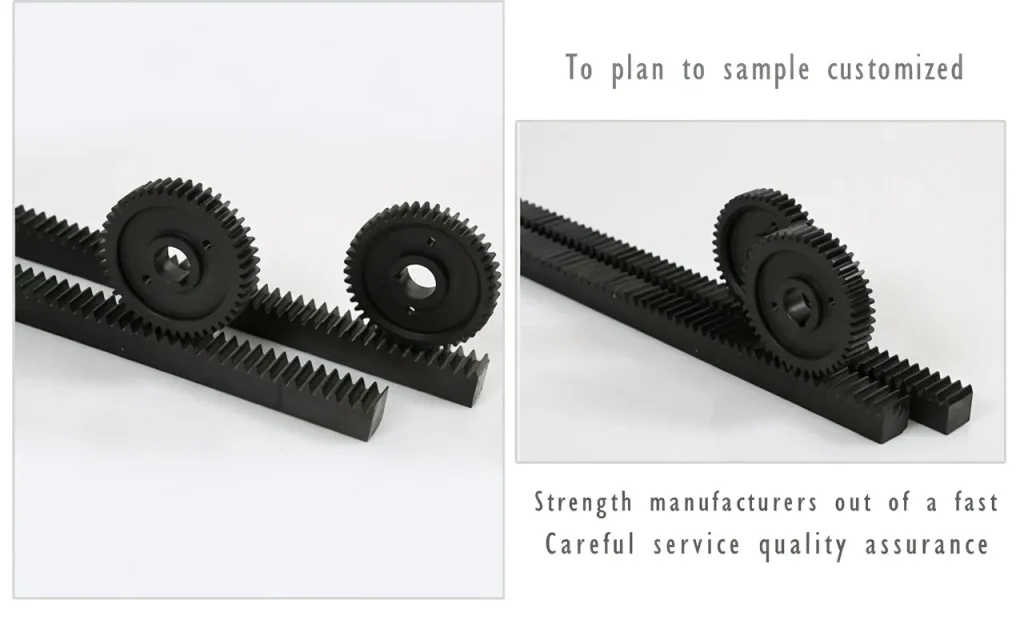
MC Nylon & Engineering Plastic Gear Racks — Available in Custom Dimensions
We respond within 24 hours · ISO9001 Certified · Free Sample Available
What Is a Plastic Gear Rack and How Does It Work?
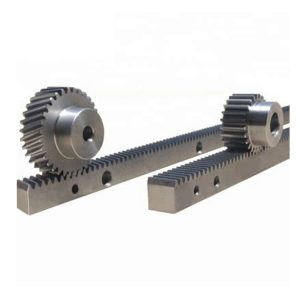
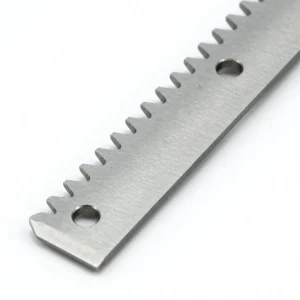
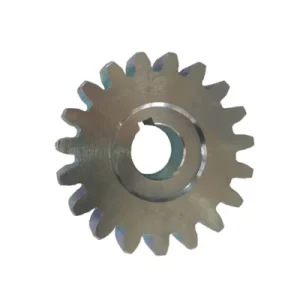
A rack and pinion gear system converts rotational motion from a drive motor into precise linear displacement along a fixed track. In this arrangement, the rack — a straight bar with teeth cut along one face — meshes with a circular pinion gear attached to the motor shaft. As the pinion rotates, it walks along the rack, pushing a carriage, door, platform, or tool head with repeatable accuracy. In traditional mechanical engineering, these components were almost universally produced from hardened steel or cast iron. The shift towards plastic gear racks over the past fifteen years reflects a broader move in machine design towards lighter, quieter, and more chemically inert motion components.
Plastic rack gears produced from engineering polymers such as MC nylon, POM (acetal), PEEK, and UHMWPE offer a combination of mechanical properties that is increasingly difficult to ignore. They are self-lubricating — meaning many applications can run without external grease, a major advantage in food-contact and pharmaceutical environments. They are electrically non-conductive, resistant to a wide range of acids, alkalis, and cleaning agents, and significantly lighter than equivalent steel racks, which matters considerably in high-speed reciprocating systems where inertia must be minimised.
The tooth profile geometry of a plastic gear rack — typically a standard Module 1 through Module 4 spur tooth form for industrial conveyor applications — is determined during mould design and remains consistent across every injection-moulded part in the production run. This consistency is what gives engineered plastic racks a competitive advantage in automated assembly lines, where tolerance stack-up across hundreds of rack segments must remain within a tight window to avoid pitch errors and indexing failures.
Material Selection Guide for Plastic Gear Racks
Choosing the correct polymer for a gear rack application is not a cosmetic decision — it directly determines operating life, load capacity, dimensional stability under thermal cycling, and chemical compatibility with the surrounding process environment. The table below summarises the most commonly specified materials available from Ever-Power’s injection moulding facility, alongside their principal mechanical characteristics and the conveyor or automation scenarios where each material most frequently proves superior.
Technical Performance Parameters
The following standard performance parameters apply to Ever-Power’s injection-moulded plastic gear rack range. Custom specifications — including non-standard modules, extended rack lengths, or proprietary tooth profiles — are accommodated through the company’s in-house mould design and tool steel machining facility. All racks are manufactured to ISO9001 quality management standards and are available with full dimensional inspection reports and RoHS compliance documentation.
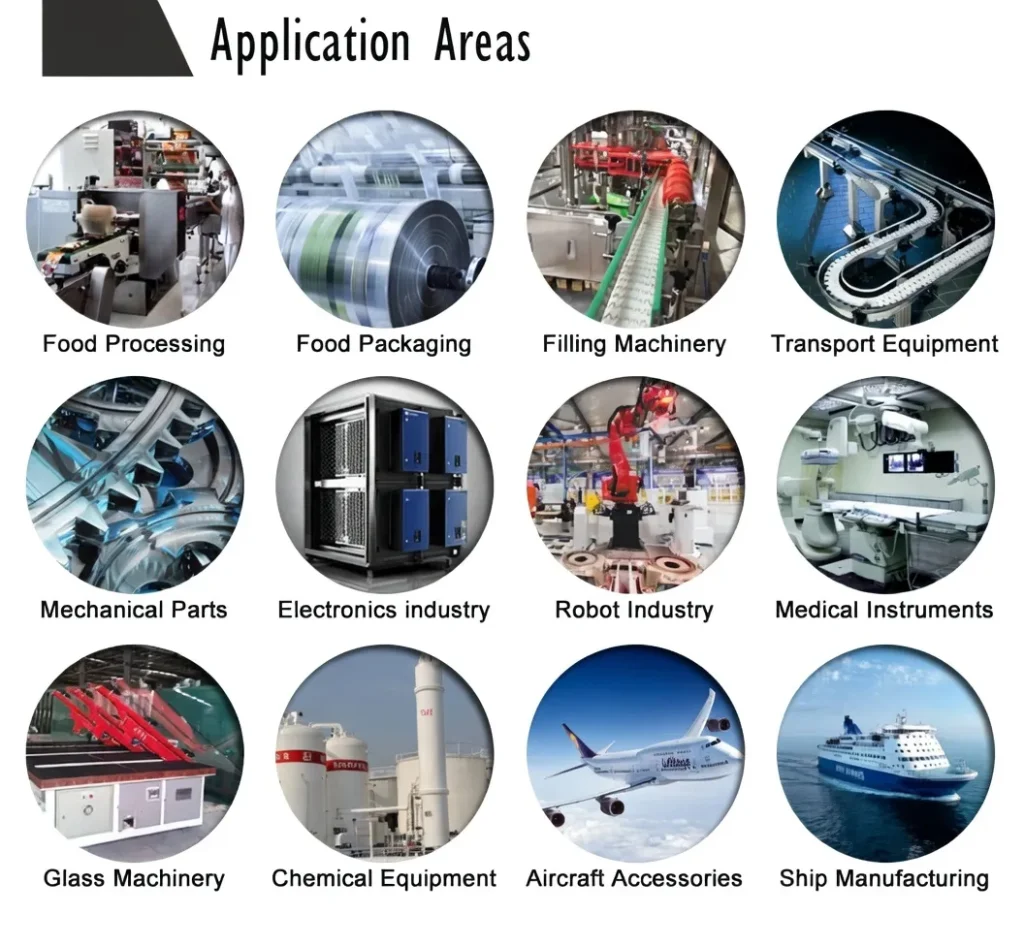
Where Plastic Gear Racks Excel: Key Application Scenarios
Industrial Conveyor Systems
In pallet conveyors, bottle-handling lines, and sortation systems, plastic gear racks operating alongside a mating pinion provide smooth, low-noise lateral transfer of product carriers. The self-lubricating nature of nylon and POM racks eliminates the need for oil spray systems, reducing maintenance intervals dramatically and preventing product contamination in food and beverage facilities.
Pick-and-Place Automation
High-speed gantry robots and Cartesian pick-and-place units depend on lightweight, dimensionally consistent rack segments. A PA66+GF rack delivers the stiffness required for rapid, repeatable indexing while keeping the moving mass low enough to allow fast acceleration and deceleration cycles — a critical factor in cycle-time-sensitive electronics assembly and packaging operations.
Automated Sliding Doors & Gates
From hospital cleanroom doors to industrial security gates, rack-driven actuators require quiet, reliable operation in repetitive duty cycles. Plastic gear racks in POM or natural nylon produce significantly lower operating noise than steel equivalents — a consideration that is now routinely specified in NHS-contracted facility builds and pharmaceutical manufacturing refurbishments across England and Scotland.
Laboratory & Pharmaceutical Equipment
PEEK gear racks are increasingly used in analytical instrument positioning stages and drug dispensing robots operating in sterile environments. PEEK’s exceptional resistance to autoclave sterilisation temperatures and aggressive cleaning chemicals makes it the only practical polymer for applications where repeated high-temperature wash-down cycles are standard procedure.
Food Processing & Packaging
UHMWPE and food-grade nylon gear racks are approved for incidental food contact in the EU and UK regulatory frameworks. In slicing machines, portioning systems, and thermoform packaging lines, the rack must withstand repeated high-pressure washdowns with caustic detergents while maintaining dimensional accuracy. Standard steel racks corrode within months in these conditions; plastic rack gears operate for years.
Machine Tools & CNC Auxiliary Axes
In the auxiliary axes of CNC machining centres — tool changers, pallet shuttles, chip conveyors — plastic gear racks reduce the risk of scoring a metal guide surface if a rack tooth fails under overload. The controlled failure mode of engineering polymers protects the more expensive steel rail system, reducing repair costs and unplanned downtime in UK precision engineering workshops.
Why Engineers Specify Plastic Gear Racks Over Steel
The decision to specify an engineering plastic gear rack instead of a conventional steel equivalent is rarely taken lightly in a professional design office. It is the product of a systematic comparison of total cost of ownership, maintenance burden, environmental compatibility, and mechanical duty cycle analysis. When that comparison is carried out rigorously, plastic rack and pinion systems consistently outperform their metal counterparts across a wide range of industrial conveyor and automation scenarios.
Noise Reduction
Engineering polymers absorb vibration and dampen meshing impact noise by up to 10–15 dB compared to equivalent steel racks — a measurable benefit in assembly environments subject to noise-at-work regulations under UK Health & Safety Executive guidance.
Corrosion Resistance
Unlike steel, plastic rack gears do not rust, oxidise, or pit when exposed to water, cleaning chemicals, or humid atmospheres. This extends component service life dramatically in wet processing areas, outdoor conveyors, and coastal industrial sites.
Weight Saving
Nylon and POM plastic rack segments weigh 6–8 times less than equivalent steel sections. In multi-axis robotic systems and fast-moving gantries, this mass reduction translates directly into lower servo motor sizing, reduced energy consumption, and faster cycle times.
Self-Lubricating
MC nylon, POM, and UHMWPE gear racks run without oil or grease in many duty cycles. Eliminating external lubrication removes a recurring maintenance cost, prevents contamination of adjacent products or machinery, and simplifies compliance with food safety and cleanroom standards.
Cost Efficiency
Injection-moulded plastic gear racks are typically 30–60% less expensive than precision-ground steel racks of equivalent tooth form and length. For large conveyor installations requiring hundreds of rack segments, this price differential represents substantial capital expenditure savings at the commissioning stage.
Custom Dimensions
Every dimension — tooth profile, rack length, cross-section geometry, mounting hole pattern, and material colour — can be tailored to the customer’s engineering drawing. This flexibility removes the need for design compromises when standard catalogue sizes do not precisely match the intended application envelope.
Customer Success: UK Food Processing Manufacturer
The Challenge: A mid-sized poultry processing company operating three primary slaughter and portioning lines in West Yorkshire was experiencing premature rack-and-pinion failures on its infeed conveyor transfer units. The original galvanised steel gear racks were rusting through after just six to nine months of operation due to constant exposure to saltwater brine, blood, and caustic cleaning agents applied twice daily. Each replacement required a four-hour line shutdown, generating approximately £8,000 in lost production per event.
The Solution: The plant engineer contacted Ever-Power and submitted the original rack drawings with a request for a UHMWPE alternative. Ever-Power’s engineering team assessed the load profile — a maximum dynamic radial load of 380 N per rack segment at 0.6 m/s traverse speed — and confirmed that UHMWPE rack segments at Module 2 would provide adequate load capacity with significantly superior chemical resistance. A custom mould was cut within 22 days. Sample parts were dispatched for dimensional verification and installed in one section of the infeed line for a six-week trial.
The Outcome: After 14 months of continuous operation, the UHMWPE gear racks showed no measurable tooth wear, no surface degradation, and no corrosion. The plant subsequently retrofitted all three lines. Total annual maintenance cost for the rack-and-pinion systems dropped by over 74%. The procurement manager noted that the full payback on tooling investment was achieved within the first five months of full-line deployment.
What Our Customers Say
“We had tried two other plastic rack suppliers before finding Ever-Power. The dimensional consistency of their MC nylon racks is genuinely impressive — we ran 400 segments across a 200-metre palletiser conveyor with zero pitch cumulative error. Our maintenance schedule has gone from monthly to annual.”
“The PEEK gear racks we ordered for our analytical sample positioning stage exceeded every mechanical requirement. The lead time was 28 days from drawing approval to delivery in our Edinburgh facility, which beat the European alternatives we had quoted. The price was considerably more competitive too.”
“Sourcing custom POM rack gears from Ever-Power for our automated warehouse shuttle system was one of the best procurement decisions we made on that project. The free sample programme let us validate fit before committing to volume. Their customer service team responds within the same business day every time.”
Our Manufacturing & Custom Engineering Capability
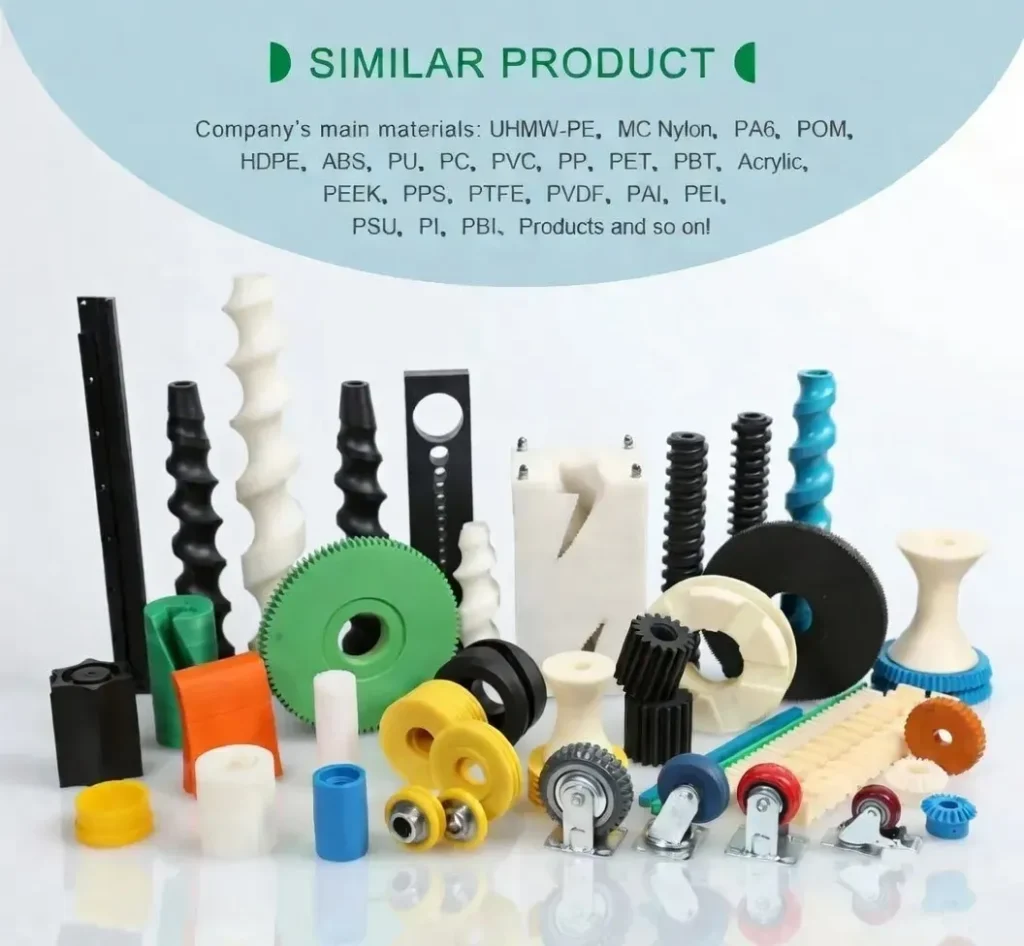
Hangzhou Ever-Power’s injection moulding facility is built around a philosophy of total flexibility. Unlike catalogue-only distributors, Every component we produce — from the simplest standard Module 1 nylon rack to a complex PEEK rack with integrated mounting bosses and asymmetric cross-sections — begins with in-house mould design using the latest CAD/CAM tooling software. Our mould steel inventory includes S136H, NAK80, 718H, SKD61, H13, and 420 grades, selected to match the production volume, required surface finish, and polymer chemistry of each order. This breadth of tooling steel expertise means that customer tooling investment is optimised: we do not specify overengineered mould steel for short-run prototype tools, nor do we compromise on hardness specification for high-volume production moulds destined to run millions of cycles.
For UK buyers, Ever-Power’s customisation capability covers every aspect of the rack gear specification. Tooth module, pressure angle, rack length, cross-section geometry, mounting hole patterns, colour coding by material or application zone, and surface texture can all be modified to match the customer’s design intent. We work from 2D drawings in DXF or PDF format, 3D STEP/IGES files, or from physical samples where drawings are unavailable. Our engineering quotations include material recommendation notes, mould life projections, and dimensional GD&T confirmation — the level of technical documentation that UK procurement and quality assurance teams expect from an ISO9001-certified supplier.
Free samples · Respond within 24 hours · ISO9001 · SGS · RoHS certified
Frequently Asked Questions
Ready to Source Plastic Gear Racks for Your UK Project?
Whether you need standard in-stock nylon rack segments or a fully custom PEEK gear rack machined to your drawing, Ever-Power’s team of application engineers is ready to support your project from first enquiry through to post-delivery quality confirmation. Reach out today and receive your quote within 24 hours.
✉ Get a Quote Now — [email protected]
ISO9001 · SGS · RoHS · Free Sample · Ships to UK · edit by gzl