Description
Gate Automation Engineering · UK Technical Reference
Nylon Gear Racks for Sliding Gate Motors:
The Complete Technical & Buying Guide for UK Installers
From coastal logistics depots to Edinburgh school entrances — how choosing the right nylon rack transforms gate performance, reduces lifetime servicing costs, and eliminates the noise complaints that follow metal-on-metal installations.
Why the Rack Is the Heart of Every Sliding Gate System
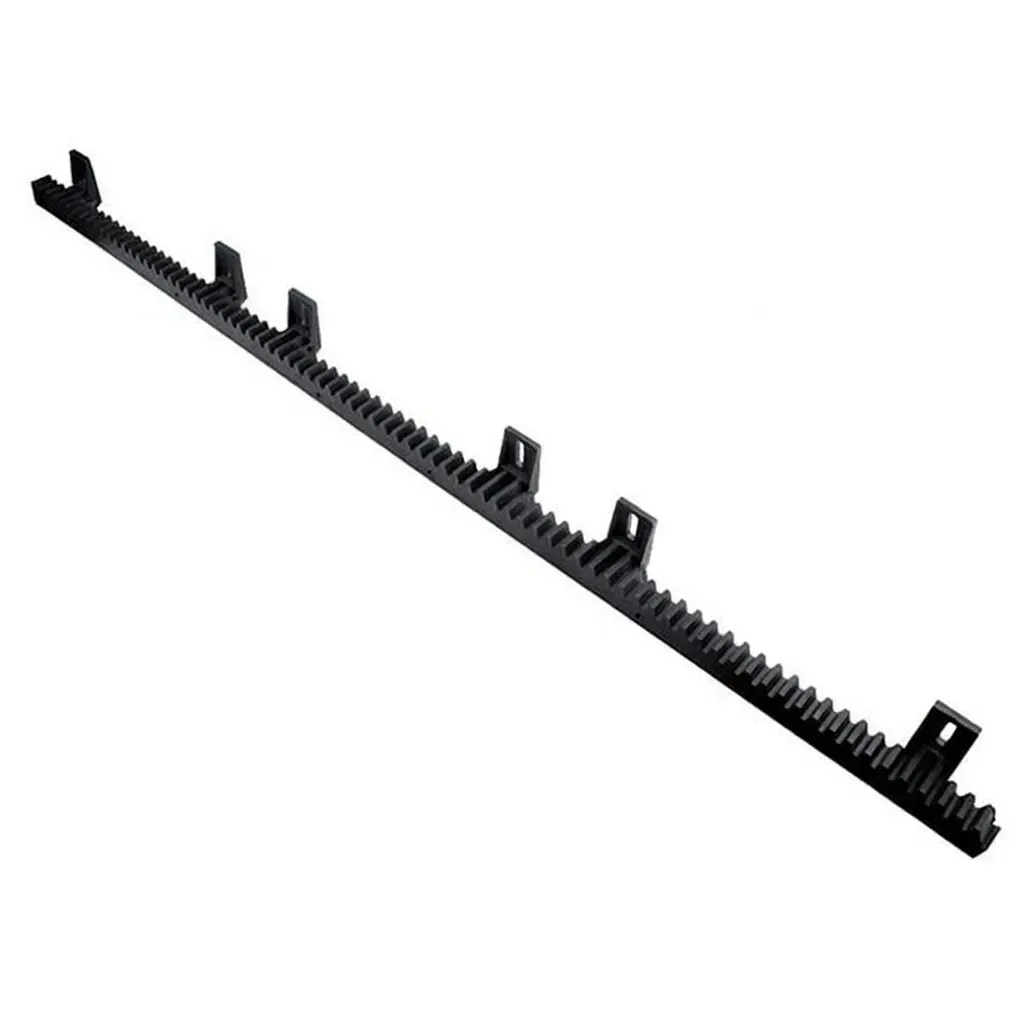 Walk past any automated sliding gate in the UK — whether it is protecting a logistics depot in Birmingham, a primary school entrance in Manchester, or a private estate along the Surrey hills — and you will find one critical component doing the bulk of the mechanical work: the gear rack. It is the linear backbone that converts the motor’s rotational output into smooth, controlled gate travel. Get this single component wrong, and no amount of motor specification, electronic controller sophistication, or groundwork precision will save you from noise, vibration, premature wear, or outright mechanical failure in the field within eighteen months of commissioning.
Over the past decade, nylon racks have quietly displaced galvanised steel as the default choice across a growing share of UK gate automation projects. The reasons are grounded in measurable physics and practical economics: nylon absorbs shock loads, self-lubricates, resists the corrosive salt-laden atmosphere common in coastal areas from Cornwall to the Scottish Highlands, and runs almost silently even at higher pinion speeds. For any installer, facilities manager, or electrical contractor currently weighing up component choices before cutting a track, understanding exactly how a nylon rack works — and which configuration suits a specific application — is money well spent before a single purchase order is raised.
This guide draws on more than eighteen years of hands-on gear rack engineering experience and covers the design variants currently available, the technical performance data you need to quote accurately, real-world installation scenarios drawn from active UK sites, and the questions British buyers ask most consistently before placing an order. Whether you are replacing a worn-out rack on a residential driveway in Cheshire or specifying two hundred metres of rack for a new commercial development near the Thames Estuary, the information here will help you make a confident, well-informed decision.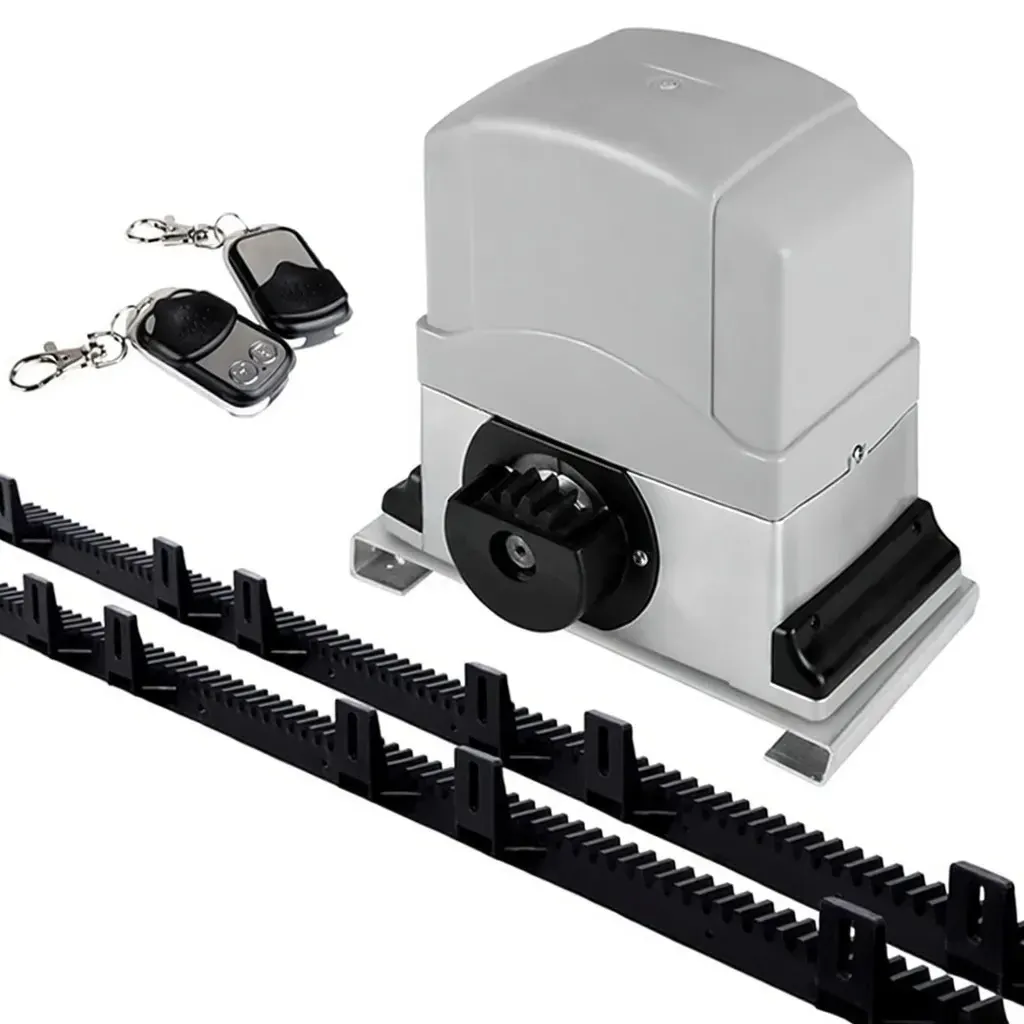
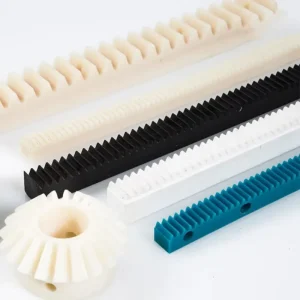
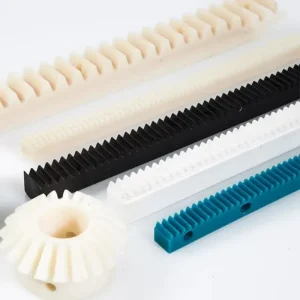
2-Lug, 4-Lug & 6-Lug Nylon Rack Range
Steel vs Nylon Racks: Why UK Gate Professionals Are Switching
The shift from galvanised steel racks to nylon gear racks in residential and light commercial gate automation is not driven by cost cutting — it is driven by measurable performance gains under real British operating conditions. Steel racks are inherently rigid. When a heavy gate encounters debris on the track, thermal expansion on a warm July afternoon, or a sudden wind gust, the stiff steel-on-steel mesh transmits those stress events directly into the motor gearbox. Over twelve to eighteen months of daily operation, that cyclic stress accumulates into premature bearing wear, increased power draw, and mounting service call-outs that erode installer profit margins and damage client trust.
Near-Silent Operation
Nylon’s inherent damping coefficient absorbs micro-vibrations generated at the pinion-to-rack mesh. In residential settings across the UK — a key market segment — this eliminates the metallic clatter that triggers neighbour complaints and can breach planning permission conditions where acoustic impact assessments apply to new gate installations.
Full Corrosion Immunity
Britain’s climate — persistent rain, coastal salt spray, and freeze-thaw cycling throughout winter — is hard on any metal component. Nylon racks are entirely immune to oxidation. Unlike galvanised steel, they will not rust, pit, or seize to mounting hardware regardless of how many years they are exposed to outdoor conditions.
Self-Lubricating
Premium-grade nylon compounds incorporate internal lubricant additives that migrate to the tooth surface during normal operation. This eliminates the need for scheduled grease re-application — a significant factor when racks are installed at height, in weatherproof enclosures, or in locations that are difficult to service routinely without specialist access equipment.
Shock Load Absorption
When a gate encounters an unexpected obstacle — a vehicle wing mirror, loose debris, or ground movement — the nylon rack flexes fractionally rather than transmitting the full impact directly to the motor gearbox. This mechanical buffering measurably reduces warranty claims related to gearbox damage and keeps motor replacement costs out of the first two service years.
Lower Motor Power Draw
The lower coefficient of friction of nylon against a steel pinion — compared to metal-on-metal — can reduce motor current draw by 6–10% in continuous duty cycle applications. Over a decade of operation on a gate cycling fifty or more times daily, this translates into measurable energy savings and reduced thermal stress on the motor windings.
Reduced Whole-Life Cost
When you add together eliminated lubrication visits, absent corrosion replacement cycles, reduced motor repair frequency, and lower call-out rates from noise complaints, the whole-life cost case for nylon racks over galvanised steel is compelling even before the initial unit price difference is considered. Many UK facilities managers now include this in formal asset management calculations.
Material Engineering: What Sets a High-Performance Nylon Rack Apart
Not all nylon is equivalent in mechanical performance, and this distinction matters enormously when specifying a rack for a gate installation that may execute twenty or more full open-close cycles per day for a projected service life of ten years. The racks in this range are manufactured from a glass-fibre-reinforced PA66 nylon compound. Standard PA66 already delivers an excellent balance of tensile strength, impact resistance, and low surface friction. The addition of glass fibre at between fifteen and thirty percent by weight raises the flexural modulus substantially — meaning the rack teeth maintain their precise geometric profile under sustained load, rather than creeping or deforming incrementally over time at elevated summer temperatures or under the weight of a heavy gate panel.
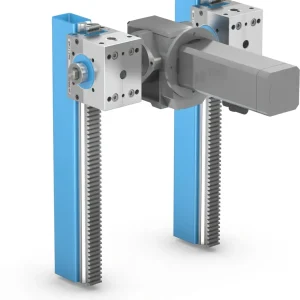
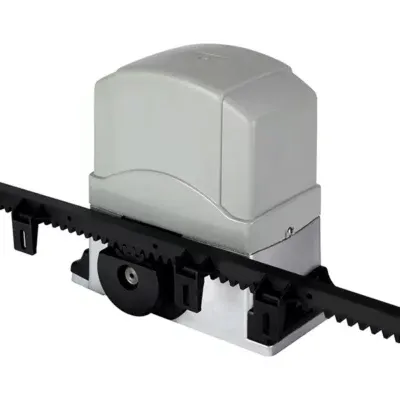
The operating principle of a rack and pinion drive is mechanically elegant. The motor’s output shaft turns a pinion gear, whose teeth mesh with the linear rack mounted along the gate’s bottom rail or side profile. Each tooth engagement converts a precise arc of pinion rotation into an equally precise increment of linear travel. Because the tooth pitch is standardised — most UK-compatible gate motor systems use Module 4, though Module 3 and Module 6 variants exist — the gear relationship is predictable, measurable, and consistent across the complete gate stroke. The result is smooth, controllable motion that the motor’s electronic speed controller can tune finely for soft-start, constant-speed, and soft-stop phases to minimise mechanical stress and improve passenger safety compliance.
The lug configuration — 2-lug, 4-lug, or 6-lug — refers to the number of mounting brackets moulded into the underside of each rack section. These lugs determine installation rigidity and the distribution of bending forces along the rack spine between fixing points. A 6-lug configuration, for instance, is specified for heavy industrial gates exceeding 1,200 kg where the rack must remain parallel to the ground surface within tight tolerances during sustained high-cycle operation without developing midspan deflection that would cause uneven tooth wear across the section length.
Technical Specifications — Nylon Rack Range
The table below summarises the key engineering parameters across the three lug variants. These figures are based on standardised test conditions; real-world performance will vary with installation quality, gate panel weight distribution, duty cycle intensity, and ambient temperature range. For a full datasheet tailored to a specific project, contact the technical team directly at [email protected].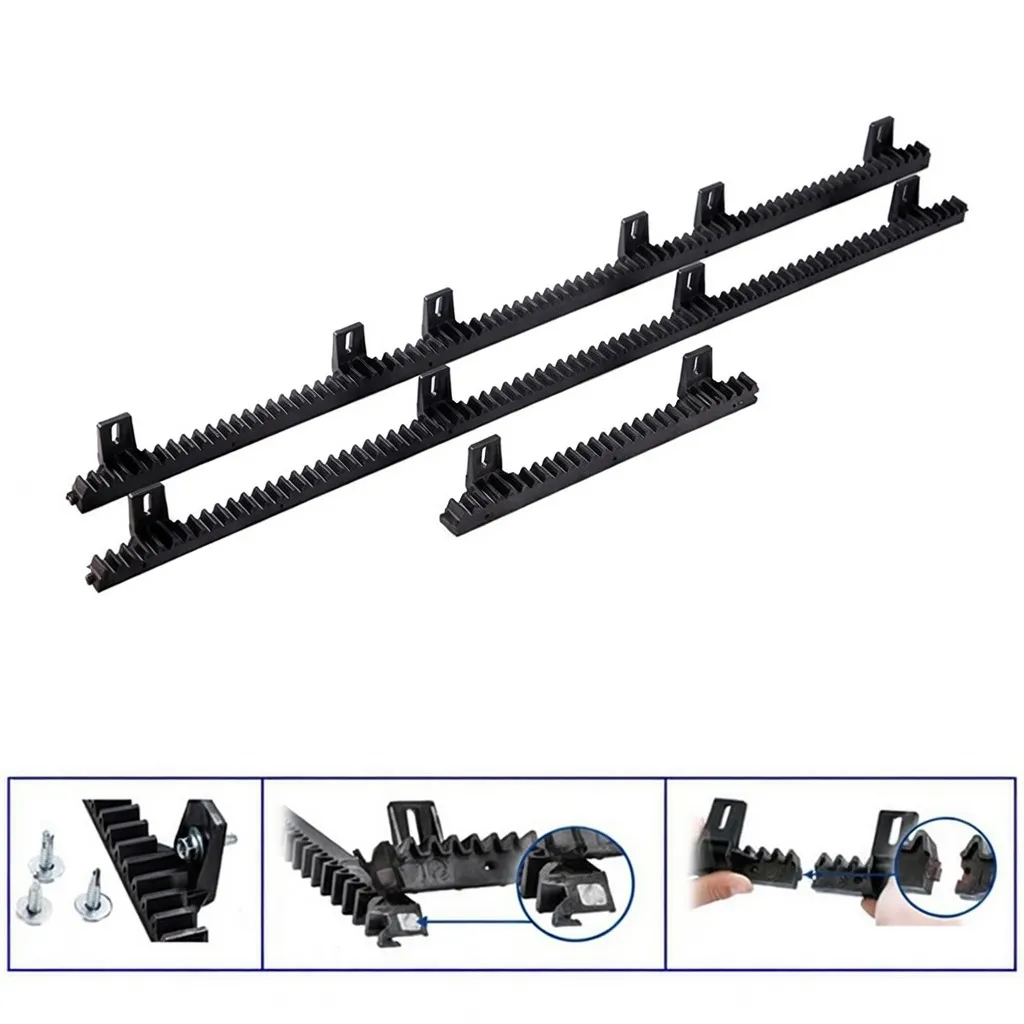
| Parameter | 2-Lug | 4-Lug | 6-Lug |
|---|---|---|---|
| Base Material | PA66 Glass-Fibre Reinforced Nylon | ||
| Standard Module (m) | Module 4 (Custom modules on request) | ||
| Section Length | 1,000 mm / section | ||
| Tooth Profile | Straight / Helical (application-dependent) | ||
| Max Gate Weight | up to 500 kg | up to 800 kg | 1,500+ kg |
| Operating Temperature | -30 °C to +120 °C | ||
| Lug Spacing | 500 mm | 250 mm | 166 mm |
| Friction Coefficient (vs steel pinion) | 0.10 – 0.15 (dry); 0.05 – 0.10 (lubricated) | ||
| Tensile Strength | 80 – 100 MPa (PA66 GF30 compound) | ||
| Compatible Motor Brands | FAAC, CAME, BFT, Nice, Gibidi, SEA & OEM | ||
| Surface Finish | Natural nylon — no coating required | ||
Key UK Application Sectors: Where Nylon Racks Perform Best
The versatility of the nylon rack and pinion drive makes it suitable across a wide spectrum of British gate and access control installations. Below are the categories where demand from UK specifiers, installers, and facilities managers is strongest and where the material advantages of nylon deliver the most compelling return on investment.
🏠 Residential Driveways & Private Estates
In residential installations across the Home Counties, Cheshire, and Edinburgh’s commuter suburbs, the 2-lug nylon rack is the dominant choice. Quiet operation is paramount — homeowners rarely complain about a gate they cannot hear cycling. Gate weights in this sector typically fall between 200 kg and 450 kg, which is well within the 2-lug specification envelope. Compatibility with all major residential motor brands including the FAAC 400 series, CAME BK, and BFT Deimos is confirmed and tested.
🏭 Light Industrial & Commercial Premises
Trade counters, smaller manufacturing sites, car dealerships, and commercial storage facilities across the Midlands and the North West typically deploy 4-lug nylon racks. Gate panels in this category often incorporate steel mesh infill and can reach 600 to 750 kg. The four-point mounting reduces midspan rack deflection under dynamic loading — particularly important when the gate panel’s centre of gravity is offset from its geometric centre.
🚚 Logistics, Distribution & Warehousing
Nationwide logistics hubs — particularly in the East Midlands triangle and along the M62 corridor near Leeds and Manchester — require gates that cycle reliably fifty to one hundred times daily under HGV traffic. The 6-lug nylon rack, paired with an industrial-grade motor, provides the structural stability for this duty level. Corrosion resistance is especially important near pressure-washing zones and dock areas where wash-down routines are daily.
🏥 Healthcare, Education & Public Sector
NHS trusts, local authority car parks, and academy schools across England, Scotland, and Wales operate under stringent maintenance budget constraints and tight procurement compliance requirements. The low-servicing requirement of the nylon rack — no scheduled greasing, no rust treatment, no corrosion replacement cycles — directly reduces the whole-life cost that appears in facilities management asset plans and makes the product easy to justify to procurement committees.
🔒 Perimeter Security & Data Centres
High-security perimeter fencing for data centres, bonded warehouses, and critical national infrastructure demands absolute mechanical reliability. A gate that fails to close on demand due to a corroded rack section is a security incident, not just a maintenance issue. The 6-lug nylon rack’s combination of dimensional stability, immunity to chemical attack, and high fatigue life under cyclic loading makes it the specification of choice for security-critical applications throughout the UK.
⛋️ Renewable Energy & Utility Sites
Solar farms, wind turbine maintenance depots, and water treatment works across rural Britain often sit in remote, exposed environments where routine maintenance is time-consuming and costly. Specifying nylon racks in these locations — where gates may remain unserviced for six to twelve months between inspections — dramatically reduces the risk of finding a seized or corroded rack when site access is needed urgently during an operational emergency.
Choosing the Right Lug Configuration for Your Project
Match the rack variant to your gate weight, duty cycle, and mounting requirements
2-Lug Rack
Ideal for residential and small commercial gates up to 500 kg. Minimal hardware, fast installation, and compatible with virtually every residential motor brand sold by UK distributors. The lightest section weight in the range makes handling and cutting straightforward on single-installer jobs.
4-Lug Rack
The standard choice for medium-weight commercial gates from 500 kg to 800 kg. Closer lug spacing reduces rack deflection under dynamic loading and is particularly suited to solid-infill metal panel gates where weight distribution can be uneven across the horizontal span. Popular on light industrial sites across the Midlands and Yorkshire.
6-Lug Rack
Engineered for heavy industrial gates exceeding 1,200 kg and sites with 50+ daily cycles. Six-point mounting virtually eliminates section deflection across the full 1,000 mm length. Specified routinely by UK access control engineers for perimeter security systems, bonded warehouse entrances, and critical infrastructure facilities where gate reliability is non-negotiable.
Customer Success Story: Avonmouth Logistics Park, Bristol
The Challenge
A third-party logistics operator managing a 45,000 sq ft warehouse facility near Avonmouth Dock came to us with a persistent and costly problem: their existing galvanised steel gear racks were developing visible surface rust and tooth degradation within fourteen months of installation. The culprit was the site’s saline coastal atmosphere combined with daily pressure-washing of the dock apron. Each replacement cycle was costing approximately £850 in materials and two days of operational disruption. They needed a long-term solution compatible with their existing FAAC 741 industrial motor, capable of handling over sixty daily gate cycles, and requiring minimal input from their three-person facilities team.
Our Solution
After reviewing the gate engineering data — a 3.5-metre-wide sliding panel weighing approximately 920 kg, driven by the FAAC 741 — we recommended a full conversion to 6-lug glass-fibre-reinforced nylon racks. A custom tooth-profile verification was performed to confirm perfect mesh compatibility with the pinion already fitted to the FAAC motor shaft. Ten rack sections were supplied to cover the full nine-metre gate travel distance, with two additional sections provided as on-site spares for peace of mind.
The Outcome
Thirty-two months after installation, the nylon racks show no measurable tooth wear, zero corrosion, and the motor’s average power consumption has fallen by an estimated 8% due to the reduced friction coefficient of nylon against the existing steel pinion. The facilities manager has calculated a whole-life cost saving of approximately £3,400 over the projected ten-year service period — equivalent to four complete steel rack replacement cycles that will now never need to happen.
What UK Gate Professionals Say
“We’ve been fitting these nylon racks on commercial jobs across Greater Manchester for about two years now. The noise difference compared to steel is something clients notice immediately — they stop asking why the gate makes that banging sound every morning. Delivery lead times have been reliable throughout, which matters when you’re co-ordinating with groundwork teams on tight programmes.”
“We specified the 6-lug racks for a bonded warehouse at Tilbury Docks. The environment is genuinely harsh — salt air, diesel fumes, and daily pressure-washing of the whole yard. Eighteen months in, there is no sign of corrosion or tooth degradation whatsoever. We’ve since recommended the same spec to two other clients operating dock-side facilities in Essex and Kent.”
“Retrofitted an Edinburgh secondary school’s gate system to the 4-lug nylon rack last autumn. The head teacher can now walk past the gate at 7:45am without needing to apologise to the neighbours for the noise. The no-lubrication servicing argument also helped us secure the facilities budget sign-off — procurement loved the fact there was no annual maintenance contract required for the rack itself.”
Bespoke Manufacturing & Custom Rack Solutions
Standard catalogue rack sections cover the vast majority of UK gate automation projects, but a meaningful and growing proportion of applications require something the off-the-shelf range cannot deliver. Unusual gate widths, non-standard module pitches, legacy motor systems with proprietary pinion geometry, or specialist environments where specific nylon compounds must be used for chemical resistance — these are the projects where our factory’s custom manufacturing capability moves from a nice-to-have into a genuine project enabler for UK engineers and specifiers.
Our manufacturing facility operates precision CNC machining and injection moulding lines capable of producing nylon rack sections to customer-supplied drawings. If drawings are not available, our engineering team can reverse-engineer from a physical sample component and produce a complete dimensional inspection report before any tooling is committed to. Tolerances down to ±0.05 mm on tooth form are achievable on precision projects. Custom lug positioning, modified section lengths, specific glass-fibre percentages, and helical tooth angles at non-standard helix values are all within our documented production capability — not promises, but verified production records.
Mould lead times for new custom tooling typically run 25 to 35 days from drawing sign-off, or as few as 15 days for straightforward modifications to existing tooling geometries. All new tooling is validated through a full first-article inspection with a detailed dimensional report, high-resolution photography of every critical feature, and a pre-shipment production run video. UK buyers who cannot visit the factory in person receive complete quality documentation before a single unit boards a container — so there are no surprises at goods inward.
Ready to Specify Your Custom Nylon Rack?
Send us your gate weight, motor brand, module requirement, and cycle rate. We’ll come back with a technically matched recommendation and a project price within 24 hours.
Supplying Gate Automation Professionals Across the United Kingdom
From Southampton to Inverness, the demand for reliable, low-maintenance gate automation components continues to grow alongside the UK’s ongoing investment in residential security upgrades, commercial access control infrastructure, and school perimeter safety improvements. Our nylon racks are stocked and supplied to meet the specific schedule pressures of British contractors — where a project can move from purchase order to installation within days rather than the weeks associated with some domestic supply chains.
We regularly supply gate automation distributors, electrical contractors, and specialist access control installers in London, Birmingham, Leeds, Manchester, Glasgow, Bristol, Sheffield, Liverpool, Edinburgh, Cardiff, Newcastle, and Nottingham. Standard catalogue rack sections are processed and dispatched within 24 to 48 hours of order confirmation. UK buyers can reach the technical sales team at [email protected] to discuss project-specific requirements, request physical samples for trial fitting, or obtain competitive pricing for both small trade orders and large-volume commercial supply contracts with annual call-off schedules.
Whether you are replacing a worn-out rack section on a residential driveway gate in Berkshire or specifying two hundred metres of nylon rack for a new commercial development in the Thames Estuary industrial corridor, our team has the product depth, engineering knowledge, and logistical capability to support your project from initial specification enquiry through to confirmed delivery on site.
Frequently Asked Questions
What is the typical price or cost of a nylon gear rack for a residential sliding gate motor in the UK, and where can I get a quote?
How do I know which nylon rack lug configuration is right for my sliding gate installation — what are the key factors a UK installer should consider?
Are these nylon racks compatible with FAAC, CAME, BFT, and Nice gate motor brands commonly used by UK installers?
How long does a nylon rack typically last on a high-cycle commercial sliding gate compared to a standard galvanised steel rack in UK outdoor conditions?
Which module size do I need for a standard UK sliding gate motor, and can I get custom module sizes made to order if my existing system is non-standard?
When should I replace a nylon rack on a sliding gate system, and what are the early warning signs of wear a UK service engineer should be looking for?
Can I get a bulk supply price for nylon racks for a large commercial gate automation project in the UK — is there a minimum order quantity for discounted pricing?
How do nylon gear racks perform in cold and wet British winters — is freezing temperature a problem for the material in outdoor gate installations?
What is the difference between straight and helical tooth profiles on a nylon rack, and which should I specify for a UK sliding gate motor application?
Is there a reliable nylon rack supplier in the UK who can fulfil small trade orders quickly as well as large commercial supply contracts for gate installers?
Ready to Specify?
Get a Fast Quote for Your UK Gate Project
Send your gate weight, motor brand, rack length requirement, and duty cycle to our technical sales team. Most enquiries receive a full specification and pricing response within one business day.
📩 [email protected] — Get a Quote
Nylon Rack Supplier | 2-Lug · 4-Lug · 6-Lug | UK Dispatch | Custom Manufacturing Available | edit by gzl