Description
Walk the production floor of virtually any automated facility in the United Kingdom — whether that is a logistics hub outside Manchester, a packaging line in the Midlands, or a pharmaceutical cleanroom in Cambridge — and you will encounter gear racks working silently at the heart of linear motion systems. The gear rack converts rotary motion from a pinion into precise, repeatable linear displacement, and when that rack is manufactured from high-performance engineering polymers, the advantages multiply considerably. Reduced noise, zero lubrication requirements, corrosion immunity, and dramatically lower weight are not marketing claims; they are measurable engineering properties that site engineers and procurement managers across the UK are actively leveraging to reduce maintenance overhead and total cost of ownership.
Plastic gear racks have evolved substantially over the past two decades. Early polymer racks were restricted to light-duty positioning tasks, but advances in material science — particularly glass-filled nylon, acetal copolymer, and PEEK compounds — have extended the load envelope to rival many steel specifications while preserving every non-metallic benefit. This article draws on eighteen years of application engineering experience to map the precise conditions under which plastic gear racks outperform metal alternatives, the material and dimensional specifications that matter most in British industrial contexts, and the customer success stories that demonstrate real-world return on investment.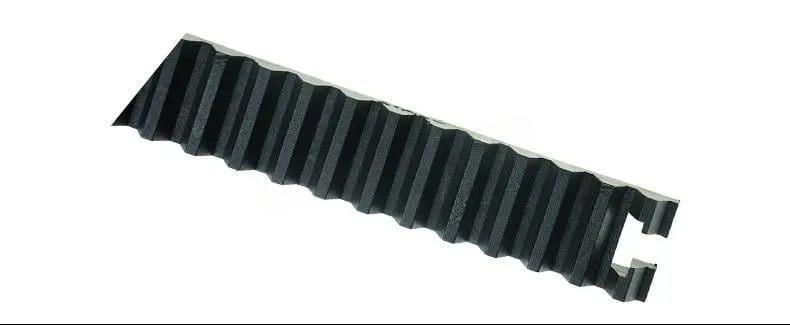
Looking for custom plastic gear racks for your UK application? Our engineers respond within 24 hours.
How a Rack and Pinion Mechanism Actually Works
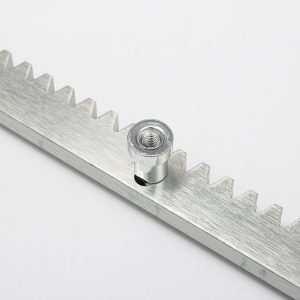
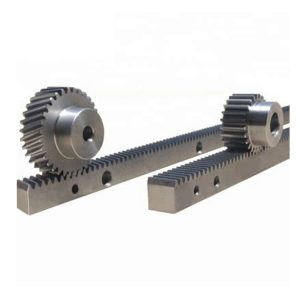
The operating principle is elegantly mechanical. A gear rack is a linear gear — a flat or round bar whose surface is cut with a series of teeth at a defined module pitch. The mating component, the pinion, is a small-diameter spur gear. As the pinion rotates under motor torque, its teeth engage successive teeth on the rack, translating rotary motion into smooth, controlled linear displacement along the rack’s axis. The rack itself is constrained by guide surfaces — typically top face, underside, and flank contact with a carriage or bearing block — so that tooth engagement remains consistent under load. Travel lengths for plastic gear racks are effectively unlimited in engineering terms; Ever Power routinely supplies rack segments in 500 mm, 1000 mm, and bespoke cut lengths that end users join end-to-end for runs exceeding 60 metres on gantry crane systems.
The same rack can serve several motion functions depending on whether the pinion or rack is the stationary element. In a conventional linear actuator, the pinion rotates on a fixed axis and the rack traverses — this is the configuration used in CNC routers, sliding gate operators, and pick-and-place gantries. Alternatively, the rack can be fixed while the pinion assembly travels along it, which suits applications like overhead crane trolleys or motorised camera slider systems. In clamping and jack functions, the rack is loaded axially and the pinion provides mechanical advantage to hold position. Understanding this versatility is essential before specifying material and module.

Material Science Behind Plastic Gear Racks
The choice of polymer determines nearly every critical performance parameter: load capacity, temperature resistance, chemical compatibility, and self-lubrication behaviour. Ever Power’s standard range covers four principal material families, each engineered for different duty classes. Nylon PA66 with 30% glass fibre is the workhorse of conveyor and packaging applications; acetal (POM) offers exceptional dimensional stability for precision positioning; UHMW-PE is specified for food-contact and wet-wash conveyor environments; and PEEK fills the gap for high-temperature or chemically aggressive environments where other polymers fail. The table below summarises the key mechanical and thermal parameters that British application engineers use during material selection.
Technical & Performance Specifications
Beyond material selection, the dimensional and performance specifications of a plastic gear rack determine how reliably it will perform over tens of millions of cycles in service. The table below provides the standard performance envelope for Ever Power’s plastic gear racks, covering the dimensional tolerances, load ratings, and operating conditions that UK design engineers need when writing specifications for procurement.

Why UK Engineers Are Switching to Plastic Gear Racks
Zero Lubrication
Eliminates grease schedules entirely, reduces maintenance labour costs, and removes contamination risk in food and pharma environments.
Low Noise Output
Polymer-on-polymer tooth contact reduces noise by 8–12 dB versus steel, supporting COSHH workplace noise assessments in production facilities.
Corrosion-Free
No rust, no oxidation, no galvanic coupling issues. Ideal for coastal, washdown, and chemically active UK industrial environments.
Weight Saving
Up to 85% lighter than equivalent steel sections, reducing motor sizing requirements, structural loads, and shipping costs from our facility to UK ports.
Lower Total Cost
Combining zero lubrication, longer service intervals, and competitive unit price, plastic gear racks consistently show lower 5-year TCO than metal alternatives in moderate duty applications.
Custom Geometry
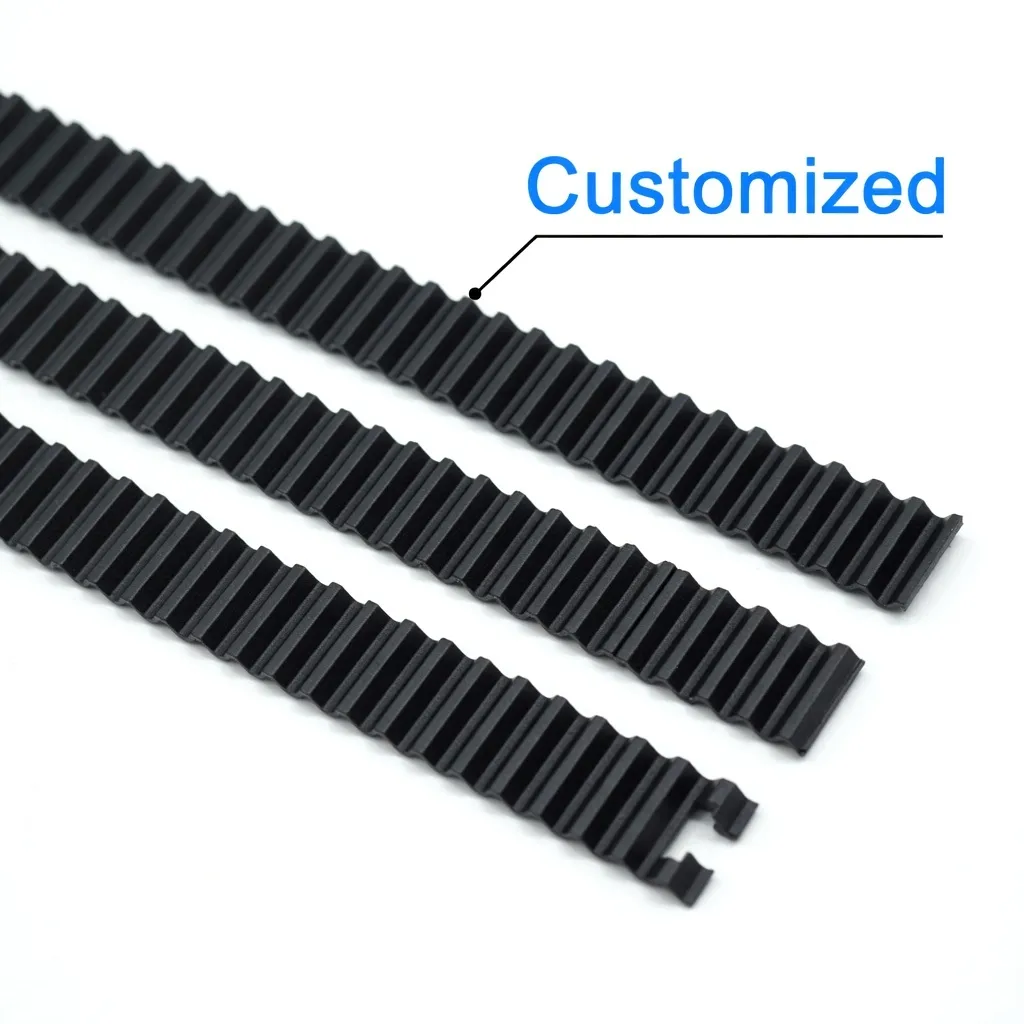
Injection moulding and CNC machining from extruded bar allows bespoke cross sections, mounting features, and integrated guide surfaces in a single component.
Customer Success: Midlands Packaging Automation
Case Study — UK Food Packaging Industry
Client: A Coventry-based contract packaging company producing ambient food products for major UK supermarket chains. The facility operates three parallel conveyor indexing lines, each running 18 hours per day, five days a week.
Challenge: The original steel gear racks on the indexing conveyors required lubrication every six weeks. Despite diligent maintenance, grease contamination was detected on product surfaces twice in eighteen months, triggering two partial recalls and significant operational disruption. The engineering manager was also concerned about corrosion accelerated by the ammonia-based cleaning agents used in the facility’s daily sanitisation protocol.
Solution: Ever Power supplied UHMW-PE gear racks in module 2, 1000 mm lengths, with a custom T-profile cross section to integrate directly with the existing carriage guide channels. The racks were manufactured to ±0.05 mm tooth profile tolerance and supplied in matched batches for consistent pitch alignment across joins. No pinion replacement was required; the existing steel pinions were retained with a minor centre-distance shim adjustment.
Outcome: Fourteen months after installation, zero grease-related quality incidents have been recorded. The maintenance team reports that the racks show no measurable tooth wear. The facility passed a BRC Global Standards audit with commendation on its machinery hygiene controls. Total project cost, including installation, recovered within seven months through eliminated maintenance labour and avoided recall risk.
“We had persistent lubrication contamination issues with steel racks on our bakery line. Switching to Ever Power’s UHMW-PE gear racks resolved this completely. Lead time was six weeks from drawing approval to delivery in Leeds, and their application engineer provided a detailed installation guide that our fitters could follow without external support.”
— Plant Engineering Manager, Leeds Food Manufacturer
“Our sliding gate system at Bristol port was suffering severe corrosion — the salt air destroyed the original steel rack in under three years. Ever Power quoted a PA66 GF30 replacement within 24 hours of my enquiry and the price was very competitive. That was two years ago and the rack looks the same as day one.”
— Maintenance Supervisor, Bristol Marine Terminal
“We build bespoke dispensing robots for UK hospital pharmacy departments. The miniature PEEK gear rack assemblies from Ever Power pass our autoclave validation with zero dimensional change. Their custom service turned around a non-standard module in under three weeks. I would not use another supplier for this critical application.”
— R&D Director, Cambridge Medical Devices OEM
Ever Power Manufacturing & Custom Design Capabilities
Standard catalogued gear racks solve perhaps 60% of engineering problems. The remainder demand a supplier with genuine custom design and manufacturing capability — and this is where Ever Power’s factory operation distinguishes itself. The facility combines precision CNC machining centres, injection moulding for high-volume miniature racks, and extruded-bar CNC turning for larger cross-section profiles. The engineering team can work from a customer’s 2D sketch, a sample component, or a full SolidWorks drawing pack. For customers who do not yet have drawings, Ever Power’s application engineers will build the geometry from a specification sheet and dimension confirmation samples, streamlining the development cycle significantly for UK OEM customers who need to compress their time-to-market.
Custom capabilities extend to profile geometry — T-slots, through-holes, counter-bored mounting features, integrated guide lips, and anti-rotation flanges can all be machined into the rack body. Colour matching is available for applications where rack visibility is a safety or branding consideration. Surface treatments including PTFE impregnation for enhanced dry-running performance, and UV stabiliser addition for external applications in the UK climate, are available on request. For high-volume OEM programmes, dedicated tooling is manufactured and held on-site so that repeat orders can be fulfilled to exactly the same dimensional standard across production batches spanning several years.
Custom Service Summary
Frequently Asked Questions
Answers optimised for voice search and conversational queries from UK engineers and procurement professionals.
What is the best plastic gear rack material for a food conveyor line in the UK that needs daily wash-down with chlorine-based cleaners?
UHMW-PE is the recommended material for food conveyor applications subject to chlorine or bleach-based cleaning regimes. It meets FDA food contact standards, shows no measurable swelling or surface degradation in dilute hypochlorite solutions, and requires no lubrication. For higher-load conveyor lines, glass-filled nylon with a food-grade additive package is an alternative worth discussing with our engineering team.
How much does a custom plastic gear rack cost per metre, and what is the typical lead time for delivery to the UK?
Pricing depends on material, module pitch, cross-section complexity, and order quantity. Standard acetal and nylon racks in catalogue sizes are competitively priced against European suppliers. Custom profiles require tooling investment on first order. We quote within 24 hours of receiving your enquiry; for urgent UK requirements, please indicate timeline in your email to [email protected]. Typical lead time for custom orders is 25–35 days, with express options available for simple profiles.
Can plastic gear racks really handle the same loads as metal racks, and where does the load capacity become the limiting factor for UK industrial applications?
For moderate-duty applications — most conveyor, positioning, and gate systems in UK industry — glass-filled nylon racks handle equivalent loads to low-carbon steel racks of the same module. Load capacity becomes limiting at sustained high speeds (above 3 m/s), elevated temperatures above 110°C, or where shock loading is frequent and severe. In those cases, we recommend consulting our application engineers for a duty-cycle analysis before specifying material.
Where can I find a reliable plastic gear rack supplier in the UK who can also provide bespoke lengths and non-standard module pitches for a small-batch OEM project?
Ever Power supplies UK OEM customers directly from our manufacturing facility. We handle small-batch orders (from single prototypes), non-standard modules, and custom cross-section profiles. UK customers receive dedicated application engineering support, pre-shipment quality documentation, and delivery tracking. Contact [email protected] with your specification and quantity requirement to receive a formal quotation within one working day.
How do I start a new gear rack project with Ever Power if I do not yet have engineering drawings or a precise specification?
Send us a sample of the existing rack you want to replace, or a hand sketch with key dimensions — load, speed, travel, and operating environment are the four essential inputs. Our team will produce a dimensioned 2D drawing for your approval before any manufacturing begins. This reverse-engineering and design service is provided at no additional charge for genuine new projects.
Which plastic gear rack material should a Scottish offshore equipment company specify for a rack and pinion hatch-cover actuator exposed to North Sea spray and low-temperature operation down to minus 30 degrees Celsius?
For North Sea offshore environments combining salt spray, low temperatures, and significant mechanical loading, we recommend a glass-filled nylon PA66 grade with UV stabiliser and impact modifier additives. This compound retains adequate notched impact resistance at -30°C, resists osmotic swelling in saline environments, and requires no lubrication. PEEK is the alternative if operating temperature cycles include steam cleaning above 150°C.
Ready to Specify Plastic Gear Racks for Your UK Application?
Our application engineers have supported hundreds of British industrial projects across conveyor, medical, marine, and automation sectors. Send your specification today and receive a detailed quotation within 24 hours.
GET A QUOTE — [email protected]
edit by gzl