What Makes Gear Racks Indispensable in Rack Railway Systems
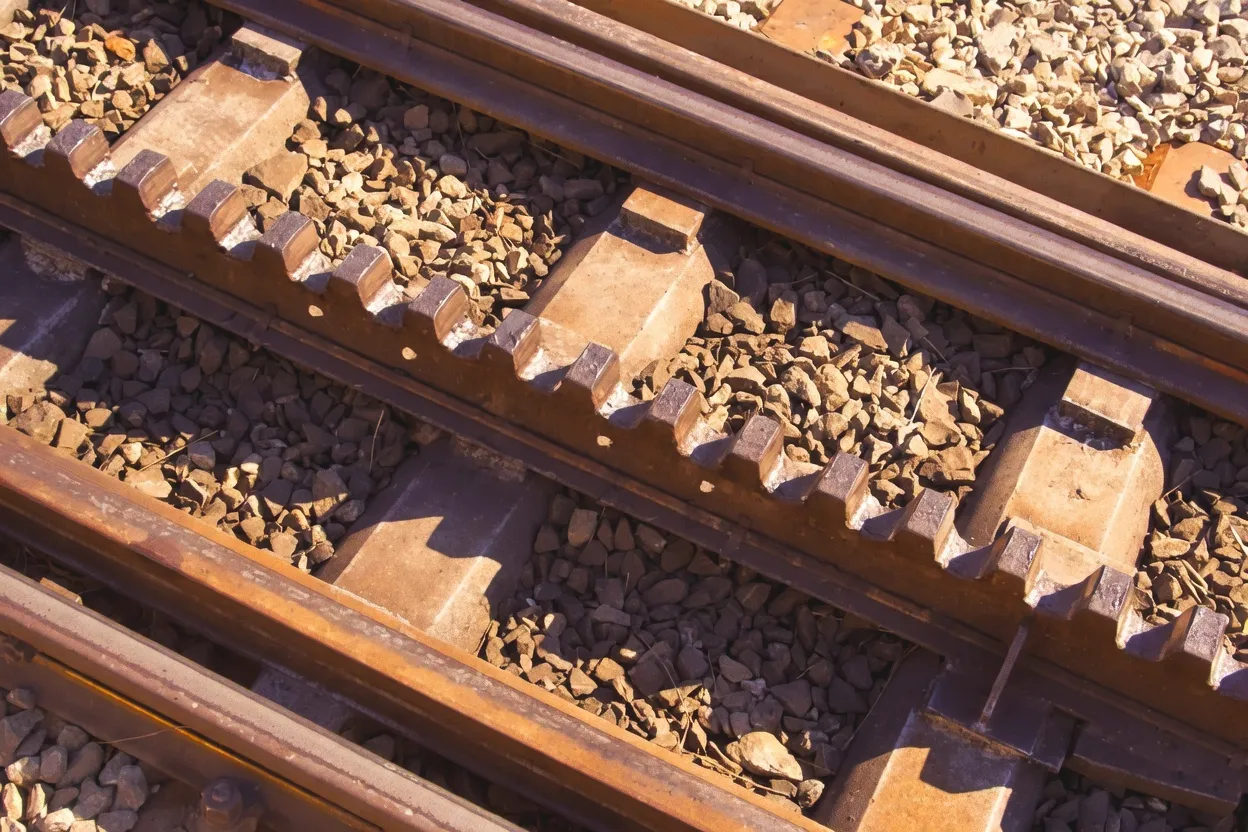
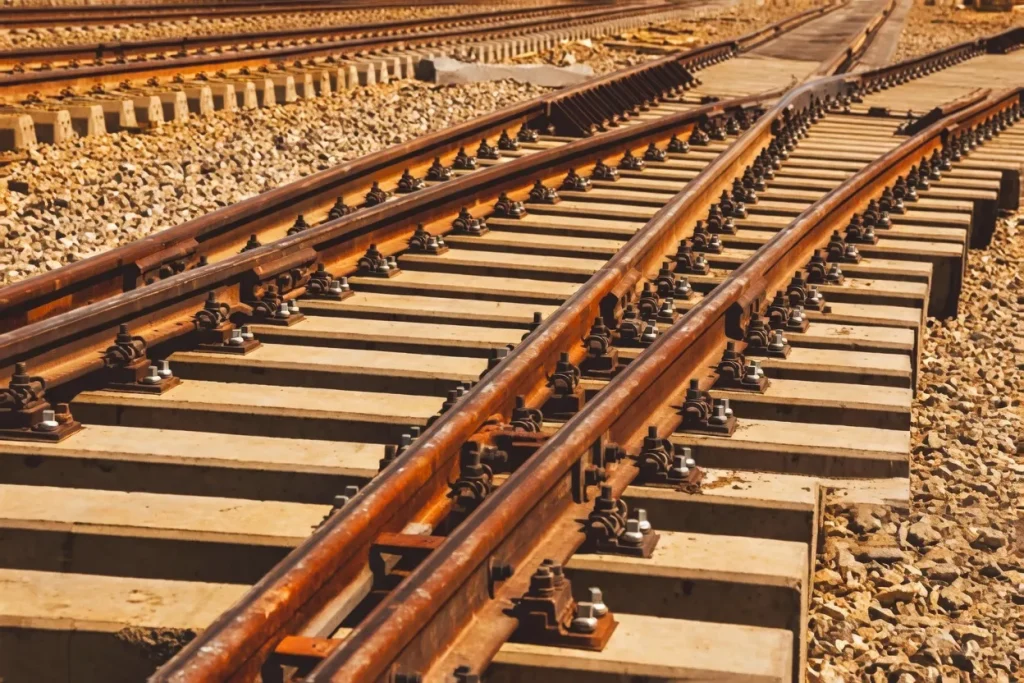 Rack railway systems — sometimes called cog railways or mountain railways — solve a problem that has challenged rail engineers since the nineteenth century. Standard steel-on-steel wheel-to-rail contact relies entirely on friction to generate traction. On gradients steeper than roughly 1 in 14, that friction margin disappears, particularly in wet or icy northern European conditions. The solution introduced by Niklaus Riggenbach in 1863 and refined through the Abt, Marsh, and Strub systems was elegantly mechanical: install a toothed rack rail along the centre of the track bed, and drive a matching pinion gear on the locomotive directly into that rack. The result is a positive mechanical engagement that does not depend on surface conditions at all.
For procurement engineers, rolling stock designers, and infrastructure asset managers working on mountain tourist railways, heritage lines, funicular connections, and specialist industrial inclines across Scotland, Wales, and the English uplands, the quality of the gear rack itself is the single most consequential component specification. A rack machined to tight tolerances from appropriate alloy steel, with correctly profiled tooth geometry and a robust surface hardness, will absorb tens of millions of engagement cycles over its service life. A rack that falls short on any of those parameters creates noise, vibration, accelerated wear, and ultimately safety risk. This is the domain where Ever Power’s manufacturing expertise, developed across more than 1,400 rack railway and industrial traction projects globally, delivers measurable value to British and European operators.
How Rack Railway Gear Racks Generate Tractive Effort on Steep Gradients
Positive Engagement Principle
The pinion gear on the vehicle meshes directly with the rack teeth fixed to the track bed. Each tooth interface transmits discrete, calculable load. Because engagement is geometric rather than frictional, tractive force is fully predictable and independent of rail surface contamination from rain, leaf fall, or frost — conditions that are exceptionally common on British hillside routes throughout the year.
Gradient Capability
Well-designed rack railway systems using precision gear racks can operate safely on sustained gradients from 1:12 up to 1:4, and in specialist funicular or industrial applications even steeper. The Snowdon Mountain Railway in North Wales, for example, operates on sections exceeding 1:5.5. This is only achievable because the rack teeth carry the load mechanically, not adhesively.
Braking via the Rack
On descent, the same rack-and-pinion interface provides controlled braking resistance. The pinion, when driven backwards by gravity through the gearbox, can be regulated to limit descent speed independently of wheel-rail friction. This dual traction-and-braking role means the rack experiences both tensile and compressive tooth loading across its full operational life, making material selection and heat treatment critical design decisions.
Material Grades, Tooth Profiles and Technical Performance Parameters
Selecting the correct material and surface finish for a rack railway gear rack is not a commodity decision. The operating environment combines high cyclic load, variable temperature, moisture ingress, and abrasive particulate from brake shoes and wheel wear. Ever Power engineers specify from the following proven material families for rack railway applications, each with distinct characteristics matched to duty cycle and expected service interval.
Where Rack Railway Gear Racks Are Specified Across the UK and Europe
Mountain Tourist Railways
Routes such as the Snowdon Mountain Railway in Wales and international examples including the Jungfraubahn in Switzerland operate continuously through tourist seasons with dense passenger schedules. The gear rack must perform reliably at up to 1,500 engagement cycles per day across temperature swings from below freezing to summer heat, without measurable pitch deviation or tooth profile degradation.
Heritage and Preserved Railways
Historic rack railway operators across Scotland, Wales, and northern England frequently need replacement rack sections that match original Abt or Riggenbach tooth profiles precisely. Ever Power produces heritage-compatible rack sections with modern alloy steel and contemporary heat treatment, delivering the original geometric specification with substantially improved fatigue life compared to nineteenth-century cast iron originals.
Endüstriyel Eğimli Demiryolları
Quarrying, mining, and heavy construction logistics in upland areas of the UK, Norway, Austria, and Switzerland rely on industrial rack incline systems to move material and equipment on gradients where wheeled vehicles cannot operate. These systems impose particularly heavy shock loading on tooth flanks during material car coupling and braking events, demanding the highest available tooth root strength from nickel-chromium steel grades.
Urban Funicular Connectors
City funiculars in Edinburgh, Hastings, and several European capitals connect urban districts across steep hillsides with high passenger frequency throughout the day. The compact rack segments used in these systems are often short-stroke and subject to very high cycle counts in a confined mechanical environment, where both dimensional accuracy and surface finish directly affect passenger ride quality and noise levels measured inside enclosed cabin cars.
Why Ever Power Gear Racks Perform Longer in Rack Railway Service
🎯
Pitch Accuracy to DIN 3963 Class 6
CNC profile grinding to DIN 3963 Class 6 ensures cumulative pitch error stays within ±0.006 mm over a 300 mm rack length. This directly reduces dynamic tooth load spikes that cause fatigue cracking at tooth roots over long service.
🔥
Through-Hardened Core with Hard Surface
Induction hardening to 58–62 HRC at the tooth surface retains a tough, impact-absorbing core at 35–42 HRC. This combination resists both surface pitting from hertzian contact stress and subsurface fatigue crack propagation from shock loads.
🛠
Custom Profile Engineering
Abt, Riggenbach, Strub, and Marsh tooth profiles can all be produced from customer drawings or reverse-engineered from worn sample sections. Bespoke module, pressure angle, and tooth height combinations are accommodated for retrofit replacement into existing rack railway infrastructure.
📋
Tam Malzeme İzlenebilirliği
EN 10204 3.1 material certificates, hardness test reports, and dimensional inspection reports supplied as standard. BS EN ISO 9001:2015 certified production ensures every batch meets the documented specification. Rail safety regulators across the UK accept Ever Power documentation without supplementary third-party verification.
Rack Profile Comparison: Abt vs Riggenbach vs Strub
Customer Success: Swiss Alpine Heritage Railway Rack Replacement Programme
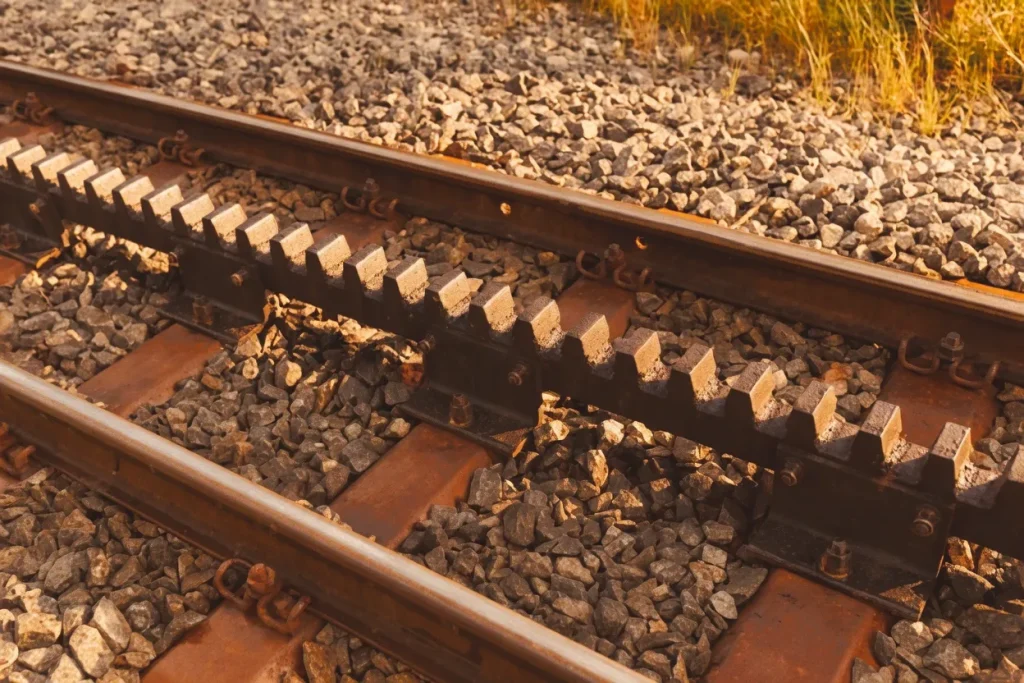 A preserved rack railway operator in the Bernese Oberland, Switzerland — running a 9.3 km Abt-system route dating to 1892 — engaged Ever Power in 2021 to supply 1,840 metres of replacement rack sections. The original wrought iron racks had reached end-of-life after 130 years of service and were causing increasing rolling noise and micro-slippage during wet-season operations. The chief engineer required exact dimensional compliance with the original Abt profile while upgrading material to 42CrMo4 alloy steel with induction surface hardening. Ever Power delivered full production within 16 weeks of order placement, with all sections inspected to DIN 3963 Class 6 and supported by EN 10204 3.1 certificates. The installed rack sections entered revenue service in spring 2022 and have since completed two full summer tourist seasons with zero reported tooth wear events and a measured reduction of 4 dB(A) in cabin noise compared to the removed originals.
“Ever Power matched our original Abt profile drawings exactly. The new racks went in without any shimming or site modification. After two full seasons the tooth flanks show no measurable wear — we could not have asked for better.”
— Chief Engineer, Swiss Bernese Oberland Heritage Railway, Switzerland
“We sourced replacement Strub rack sections from Ever Power for our Edinburgh funicular refurbishment. Delivery was on schedule, the dimensional reports were complete, and the rail authority accepted the documentation immediately. Solid supplier.”
— Procurement Manager, Scottish Urban Transport Operator, UK
“Our quarry incline in Cumbria runs at 1:4.8 with 40-tonne wagon loads. Ever Power supplied EN36C case-hardened racks that have now completed three years of continuous double-shift operation without a single tooth failure. That is exceptional for our duty cycle.”
— Engineering Director, Cumbrian Aggregate & Quarry Ltd, England, UK
Ever Power Manufacturing: Custom Rack Solutions for Every Rack Railway Brief
Ever Power operates a 28,000 m2 CNC gear manufacturing facility with dedicated rack milling, grinding, and heat treatment lines. For UK and European rack railway projects, the engineering team provides a full custom development service that begins at concept specification and runs through prototype approval, batch production, and post-installation support. Non-standard modules from M4 to M32, rack lengths from 250 mm to 3,000 mm per section, bespoke mounting hole patterns, and corrosion protection systems from zinc-nickel plating to cold-spray stainless cladding are all available within the standard custom quotation process. Every custom rack order is assigned a dedicated application engineer who holds the project from initial drawing review to final inspection sign-off. Lead times for standard grades begin at 4 weeks; complex custom alloy orders are typically completed within 10–12 weeks from approved drawings.
1,400+
Global Rail & Industrial Projects
M4–M32
Module Range Available
4 Weeks
Standard Lead Time
ISO 9001
Certified Production
Sıkça Sorulan Sorular
Ever Power — Precision Gear Rack Manufacturing for Rack Railways and Industrial Traction
Serving heritage railways, mountain tourist lines, funiculars, and industrial inclines across the United Kingdom and Europe
gzl tarafından düzenlendi