 As the United Kingdom accelerates toward its net-zero carbon targets, utility-scale solar installations are spreading from the flatlands of Lincolnshire to the uplands of Scotland. The challenge facing project developers is no longer simply generating solar power — it is extracting every possible kilowatt-hour from each panel, every single day. Solar tracking systems are the proven answer, and the gear rack is the quiet mechanical component that makes precision tracking both reliable and commercially viable over a 25-year asset life.
A solar tracker continuously repositions photovoltaic panels to follow the sun’s arc across the sky from dawn to dusk. Compared with fixed-tilt arrays, single-axis trackers consistently improve annual energy output by 20–30%, while dual-axis configurations push that gain toward 40–45%. Achieving that level of precision, day after day, in environments ranging from coastal salt air to upland frost, demands a mechanical drive system that combines positional accuracy with long-term structural endurance. That is the core role of the gear rack in any solar tracking application.
A gear rack is a linear toothed bar that meshes with a pinion gear to convert rotational motor output into smooth, controlled angular or linear motion. In a solar tracker, this translates directly into the precise tilting and rotation of panel rows — ensuring the modules track the sun with minimal angular error and maximum energy capture efficiency at every hour of daylight.
Ever Power gear racks installed on a single-axis solar tracking system — designed for UK outdoor conditions.
How the Gear Rack Drives a Solar Tracker
 In a single-axis solar tracker, a motorised pinion gear meshes with the gear rack mounted along the tracker’s structural torque tube. As the motor turns the pinion, the rack guides the entire panel row through a smooth, consistent arc from east to west throughout the day. The pitch accuracy of the rack teeth governs how closely the panels align with the sun’s actual position at each moment — a direct influence on energy capture efficiency across the full generation day.
Dual-axis tracking requires gear rack assemblies on two perpendicular axes — one controlling east-west azimuth movement and one governing elevation angle. The demands placed on the gear rack become more exacting as tracker array sizes grow, since manufacturing tolerances, tooth-to-tooth consistency, and module-to-module joining accuracy all directly affect the synchronisation of drive across hundreds of metres of panel row. Ever Power manufactures gear racks to DIN 3960 and DIN 3962 standards, in C45, 40Cr, and stainless steel grades, with hot-dip galvanised or powder-coat surface finishes rated for the corrosive conditions common at UK solar sites.
Technical Parameters — Gear Racks for Solar Tracking
Why Solar Engineers Specify Our Gear Racks
Tight Pitch Accuracy
Tooth pitch errors are held within ±0.02 mm per 300 mm, eliminating position drift and panel misalignment. This level of consistency translates into repeatable solar tracking performance across every row in a large-scale array, reducing control system corrections and improving long-term energy yield reliability.
Proven Corrosion Resistance
Hot-dip galvanised coatings conform to BS EN ISO 1461, providing durable protection against the moisture, frost, and salt-laden air common at UK solar farm sites. Optional stainless steel 316 variants are available for coastal locations in Cornwall, East Anglia, and the Scottish coastline where corrosion exposure is most severe.
Seamless Module Joining
Individual rack sections are joined using precision-ground butt pieces that maintain tooth continuity to the same accuracy standard as the rack body itself. This eliminates the position errors and micro-vibrations that poorly joined racks introduce, particularly problematic in longer tracker rows spanning 80 metres or more.
Tuổi thọ sử dụng 25 năm
Induction-hardened tooth flanks resist the cyclic wear caused by tens of thousands of tracking cycles per year, under combined mechanical, thermal, and environmental loading. Solar tracker gear racks from Ever Power are designed to match the 25-year operational lifespan that utility-scale PV project developers and lenders expect.
Application Scenarios — Where Gear Racks Drive Solar Trackers
The UK solar sector encompasses a broad range of installation types, and gear racks play a central role in the mechanical drive of each. Utility-scale solar farms across England, Scotland, and Wales rely on single-axis tracker rows spanning hundreds of metres, where a continuous gear rack drive synchronises panel movement across each row, reducing drive motor count and improving system efficiency. In these large installations, the mechanical durability and joining accuracy of the gear rack are especially critical, since even minor positional inconsistencies compound across the full row length and degrade annual energy performance.
Trang trại năng lượng mặt trời quy mô lớn
From 5 MW to 150 MW+ projects across England and Scotland, continuous gear rack drives span the full length of each tracker row, delivering smooth and precise east-to-west panel movement with minimal motor load.
Agri-PV Systems
Dual-axis tracker drives in agri-photovoltaic installations use gear racks to programme seasonal tilt angles, balancing energy generation against optimal light availability for crops or livestock grazing beneath the panels.
Commercial Rooftop Trackers
Low-profile rack-and-pinion drives are being fitted to large commercial rooftops across Birmingham, Manchester, and London, enabling tilt adjustment without the weight or footprint penalties of hydraulic systems.
Concentrated Solar Power (CSP)
Parabolic trough CSP systems demand angular positioning within 0.01 degrees. High-precision helical gear racks with preloaded anti-backlash pinions deliver the tracking accuracy required to focus solar flux precisely onto the receiver tube.
Customer Success Case
Case Study · England · Renewable Energy
60 MW Single-Axis Tracker Solar Farm, Lincolnshire
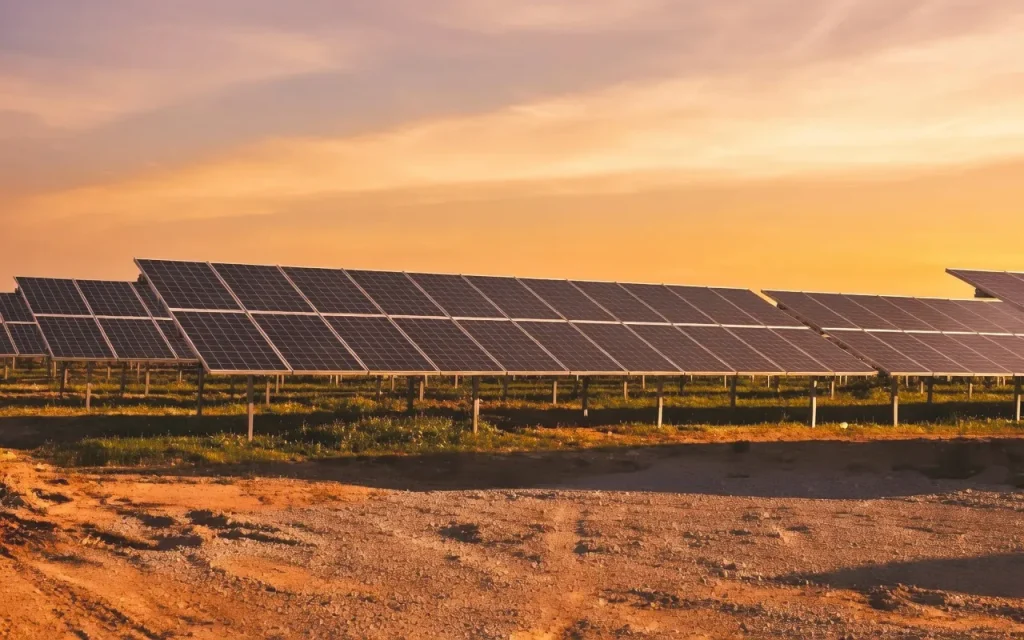 A UK-based independent power producer developed a 60 MW ground-mounted solar farm on agricultural land in Lincolnshire in 2022. The project involved 480 single-axis tracker rows, each requiring continuous gear rack drive spanning the full row length. Total gear rack demand exceeded 18,000 linear metres. The structural environment presented real challenges: Lincolnshire’s agricultural atmosphere combines elevated humidity with soil-borne corrosives, and wind loading across the flat terrain placed sustained lateral forces on the tracker frames throughout the year.
The engineering team selected module 5 helical gear racks in C45 steel with hot-dip galvanised coating, manufactured to DIN 9 accuracy grade. All sections were supplied with precision-machined joining pieces to ensure full tooth continuity across joints. Delivery was structured in three phased batches, each aligned to the site’s construction programme schedule, with zero lead-time overruns recorded across the full supply chain.
After 18 months of operation, the tracker system had recorded zero gear rack-related maintenance events. Annual energy yield exceeded the P50 forecast figure by 6.2%, a result the project’s lead engineer attributed in part to the consistent low-backlash drive performance reducing angular positioning errors during the critical morning and evening tracking cycles.
“The gear racks arrived on schedule and to specification. After 18 months of operation, the drive system has required no intervention whatsoever. We would not hesitate to specify the same product on future projects.” — Lead Mechanical Engineer, Lincolnshire Solar Farm Project
Khách hàng của chúng tôi nói gì?
We sourced gear racks for a 35 MW tracker project near Edinburgh. The team guided us through material and coating options for coastal exposure. After two Scottish winters, there is no corrosion visible on any rack section. The service was responsive and technically confident throughout the whole process.
James H. — Procurement Director, Edinburgh-based EPC Contractor
We were under serious programme pressure on a commercial rooftop tracker installation in Manchester. The gear racks arrived cut to length and ready to install. Dimensional accuracy was exactly as specified and saved us considerable fabrication time on site. We will definitely return for our next project.
Sarah M. — Project Manager, Greater Manchester Renewable Installations
For our agri-PV pilot in Wales, we needed dual-axis tracker drives with very precise positioning. The helical gear racks delivered the backlash performance our control system required. The material certificates and inspection reports were comprehensive and made our procurement approval process straightforward.
Rhys D. — Systems Engineer, Welsh Agri-Solar Development Ltd.
Custom Gear Rack Manufacturing for Solar Tracker OEMs
Ever Power operates a vertically integrated manufacturing facility equipped with CNC rack milling lines, rack grinding machines, induction hardening systems, and in-house coordinate measurement equipment. This complete production chain means solar tracker OEMs and EPC contractors can specify gear racks entirely to their own project requirements — from module pitch and tooth profile through to section length, mounting hole pattern, surface coating, and joining hardware — all consolidated under a single purchase order with full material traceability documentation.
Whether the requirement is a small prototype batch for tracker concept validation or a full production run for a 100 MW utility farm, our manufacturing capacity scales to match. We provide dedicated project engineering support for UK solar developers and serve clients across England, Scotland, Wales, and Northern Ireland, with established export logistics across Europe. Our standard production lead time for confirmed orders is four to six weeks from technical sign-off.
CNC Rack Milling
High-volume production capacity
Rack Grinding
DIN 6 precision achievable
Tôi cứng bằng cảm ứng
HRC 48–56 tooth face hardness
Full Traceability
Material certs & inspection reports
Câu hỏi thường gặp
What type of gear rack is best for a single-axis solar tracker installed on a UK solar farm?
For UK solar farm applications, a module 4 or 5 helical giá đỡ bánh răng in C45 steel with hot-dip galvanised coating is typically the most suitable choice. Helical teeth distribute load progressively along the tooth face, reducing drive noise and handling the cyclic loading that single-axis trackers generate across tens of thousands of operating cycles per year. The hot-dip galvanised finish to BS EN ISO 1461 provides the corrosion protection needed for long-term outdoor use in England, Scotland, and Wales, where moisture and frost are consistent seasonal challenges.
How much does a custom gear rack cost for a solar tracking project, and where can I get a quote from a UK supplier?
The price of gear racks for solar tracking depends on the module size, material grade, surface treatment, section length, and order volume. For utility-scale projects, volume pricing reduces the per-metre cost substantially. To receive an accurate commercial and technical proposal for your specific solar tracker project in the UK, contact the team directly at [email protected] with your project specification. We typically respond with a full written proposal within two business days of receiving your enquiry.
Which gear rack material should I specify for a solar tracker on a UK coastal site where salt corrosion is a concern?
For coastal solar sites — particularly those within a few kilometres of the sea in areas such as Cornwall, East Anglia, or the Scottish west coast — stainless steel 316 gear racks or C45 steel racks with a combined hot-dip galvanised and epoxy powder-coat duplex finish are recommended. Stainless steel 316 requires no ongoing maintenance coating but carries a higher initial cost. The duplex-coated carbon steel option offers an excellent balance of corrosion performance and overall project budget for most coastal UK applications.
How do I find a reliable gear rack supplier who can deliver to England, Scotland, or Wales on a construction programme schedule?
When evaluating suppliers for solar tracker projects in the UK, look for manufacturers who can provide material test certificates, dimensional inspection reports, and a clear phased delivery commitment. Ever Power has delivered gear rack packages aligned with phased construction programmes on multiple UK solar projects. We ship directly to site or to fabrication yards, and our standard production lead time for confirmed orders is four to six weeks from receipt of approved drawings and order confirmation.
When should I choose a helical gear rack over a straight-tooth rack for my solar photovoltaic tracking system?
Helical gear racks are the preferred choice in solar tracking applications where smooth, quiet operation and high load capacity across a long tracker row are the primary engineering requirements. The angled tooth engagement distributes force progressively rather than abruptly, reducing vibration and drive noise — particularly relevant in large single-axis arrays where multiple drive units operate simultaneously along each row. Straight-tooth racks remain a cost-effective option for simpler, shorter tracker applications with lighter structural loads and more moderate accuracy requirements.
What is the expected service life of a gear rack used in an outdoor solar tracking system in the United Kingdom?
A correctly specified, surface-treated, and properly installed gear rack should achieve a minimum service life of 25 years in a UK outdoor solar tracking application. This requires appropriate material selection for the site’s environmental exposure category, correct pinion alignment during installation, and periodic re-lubrication at intervals defined in the drive system’s maintenance manual — typically every two to three years. Induction-hardened tooth flanks significantly extend wear life under the high-cycle fatigue loading that continuous daily tracking imposes over a multi-decade operational period.
Ever Power — Gear Racks for Solar Tracking Systems | UK Enquiries: [email protected]
chỉnh sửa bởi gzl