Deskripsi
In the demanding world of railway engineering, the mechanical components you choose can define the difference between a system that lasts decades and one that fails under load. Among all the transmission elements used across the UK’s rail infrastructure — from the busy corridors of the West Coast Main Line to the dense urban loops of the London Underground — gear racks for railway axles occupy a position of critical importance that is rarely discussed outside specialist engineering circles.
These precision-machined components work continuously, often invisibly, converting the rotational energy generated by a locomotive’s motor into the controlled linear force that physically moves trains across thousands of miles of track. Whether you are an OEM procurement engineer sourcing components for a new fleet, a maintenance manager responsible for keeping ageing rolling stock in service, or a systems integrator designing next-generation light rail solutions for a UK city, understanding the fundamentals of railway axle gear racks is essential knowledge.
This guide explores the engineering principles, material science, performance parameters, real-world applications, and procurement considerations that define the market for high-quality gear racks in railway axle transmission systems — with specific focus on the needs of British rail operators, rolling stock manufacturers, and engineering supply chains.
Minta Penawaran Khusus
Our engineering team is ready to discuss your railway gear rack specification — including custom sizes, materials, and batch quantities for UK-based projects.
Engineering Principles
How Gear Racks Work in Railway Axle Transmission
Understanding the mechanical principle behind rack-and-pinion systems helps explain why these components are irreplaceable in modern rail engineering.
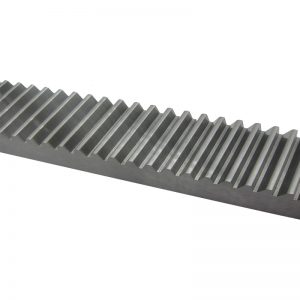
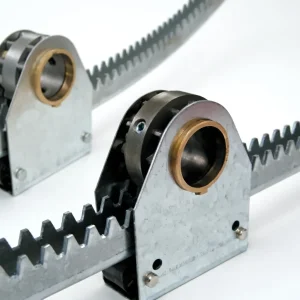
At its core, a railway axle gear rack is a linear gear — a flat or curved bar with precisely cut teeth along its length. When a pinion gear (a small circular gear) rotates against the rack’s teeth, the rotational motion is converted into controlled linear displacement. In the context of railway axle transmission, this mechanism is what ultimately translates the spinning output of a locomotive’s electric motors or gearbox into the directional force that propels the entire train.
The precision with which the teeth of a gear rack mesh with its corresponding pinion is not merely a matter of mechanical efficiency — it directly impacts ride smoothness, passenger comfort, energy consumption per kilometre, and long-term component wear. A poorly manufactured rack introduces backlash: tiny gaps between engaging teeth that cause vibration, shock loads, and accelerated fatigue in surrounding drivetrain components. Over thousands of operating hours, this translates into unplanned maintenance, early replacement cycles, and, in extreme cases, safety incidents that regulators such as the Office of Rail and Road (ORR) in Great Britain take extremely seriously.
Modern railway gear racks — particularly those supplied for UK rolling stock — must conform to exacting dimensional tolerances, surface finish standards, and hardness profiles that ensure consistent performance whether the train is operating at low speed during station approach or at line speed on an open mainline. The engineering challenge is to maintain this performance across a service life that may span ten, fifteen, or even twenty years of continuous operation in all British weather conditions: from freezing January nights in Scotland to humid summer heat in the south of England.
Rotational to Linear
Converts motor output into precise directional movement across the axle system.
Power Distribution
Load is spread evenly across axle components, preventing fatigue concentration points.
Speed & Torque Control
Gear ratio selection determines the balance between tractive effort and operating speed.
Precision Meshing
Tight tolerance manufacturing eliminates backlash and vibration across service life.
Materials & Specifications
What Are Railway Gear Racks Made From?
The material specification of a railway axle gear rack is arguably its most critical design parameter. Unlike gear racks used in lighter-duty industrial or agricultural applications, railway variants must simultaneously deliver exceptional tensile strength, surface hardness, fatigue resistance, and corrosion performance — all while tolerating the temperature extremes and mechanical shock loads inherent to rail operations. Ever Power engineers select materials based on the specific load profile, operating environment, and longevity targets of each project.
Medium-carbon alloy steels such as 42CrMo4 (equivalent to 4140 in US designation) are the workhorse material for high-load railway rack applications. After precision machining, these steels undergo induction hardening or carburising heat treatment processes that bring the tooth surface hardness to 52–60 HRC while maintaining a tough, ductile core. This dual-zone microstructure is what allows a rack tooth to absorb shock impact at the surface without fracturing at the root — the failure mode responsible for the vast majority of catastrophic rack failures in heavy rail service.
Why Ever Power
Key Advantages of Our Railway Axle Gear Racks
Engineered to exceed the demands of British rail infrastructure, our gear racks deliver measurable performance improvements across the drivetrain lifecycle.
Extreme Load Capacity
Designed to handle the enormous tractive forces generated by freight and passenger locomotives without deformation or tooth root fatigue. Our heat-treated alloy steel racks sustain axle loads that would cause premature failure in lower-grade alternatives, making them the preferred choice for demanding UK freight corridors.
Zero-Compromise Precision
Manufactured to DIN Grade 4–8 tolerances using CNC hobbing and profile grinding, our gear racks achieve tooth spacing accuracy and pitch line runout values that eliminate the backlash and resonance vibration that degrades passenger experience and accelerates adjacent component wear in high-speed rail applications.
Extended Service Life
A combination of deep case-hardening, controlled microstructure at the tooth root, and optimised lubrication groove geometry extends the functional service life of our railway gear racks well beyond the industry average. This reduces whole-life cost — a critical factor when calculating Total Cost of Ownership for UK rail operators.
Low Noise Operation
Helical tooth profiles and precision surface finishing reduce operating noise significantly compared to standard-grade spur rack alternatives. In passenger rail contexts — particularly metro and urban light rail where trains operate within residential areas — noise reduction is not merely a comfort issue but a regulatory and community relations requirement.
Ketahanan Korosi
British rail environments present particular challenges: salt spray from coastal routes, road salt contamination in shared corridors, and the perennial issue of wet winters. Our surface treatments — including phosphate coating, electroless nickel plating, and optional stainless steel construction — ensure the rack maintains its dimensional accuracy and structural integrity throughout its service life.
Safety-Critical Compliance
All railway-grade gear racks from Ever Power are produced under quality management systems compliant with ISO 9001, with full material traceability documentation available for safety-critical procurement processes. This satisfies the assurance requirements of major UK rolling stock manufacturers and Network Rail supply chain frameworks.
Skenario Aplikasi
Where Are Railway Gear Racks Used?
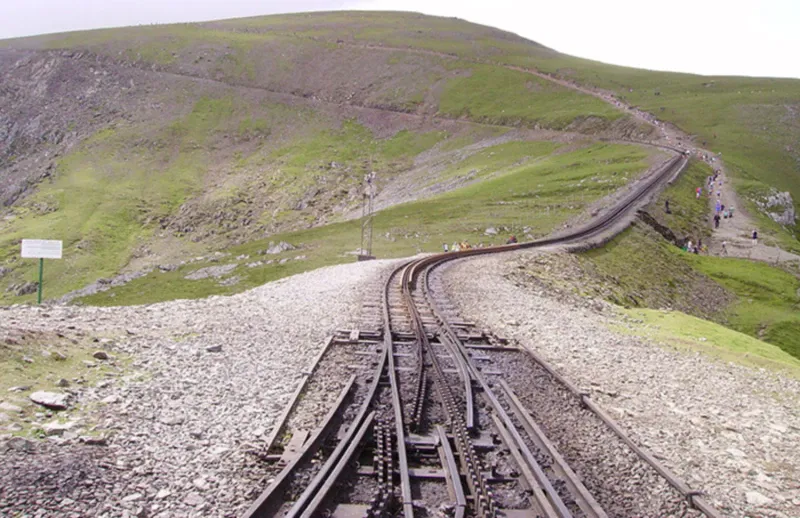
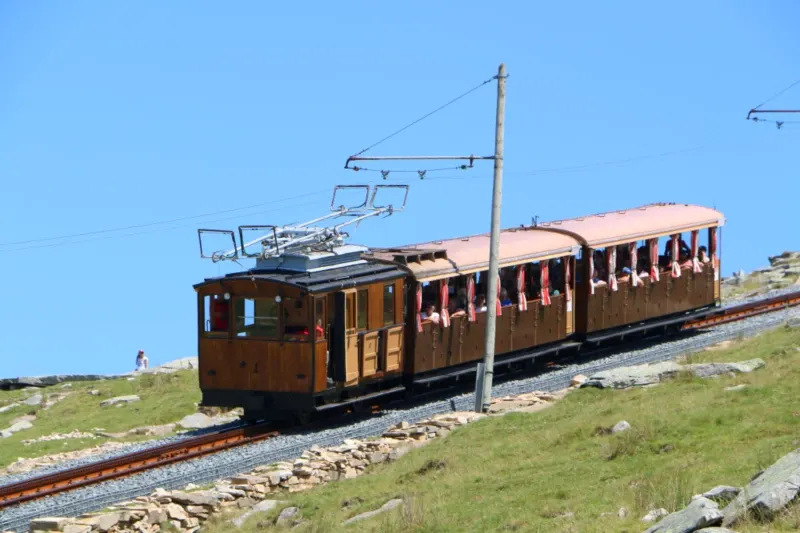
From freight haulage to urban transit, gear racks serve a wide variety of railway sub-sectors across the United Kingdom and beyond.
Customer Success
What Our Railway Clients Say
Real results from rail engineering teams who switched to Ever Power gear racks for their axle transmission systems.
We switched to Ever Power’s helical gear racks for our metro fleet refurbishment project in the East Midlands. The reduction in drivetrain noise was immediately noticeable to both our engineers and passengers. Procurement was straightforward, documentation was complete, and the team’s technical support during installation was genuinely impressive. We’ll be specifying them on our next fleet programme as a matter of course.
As a procurement engineer, what matters to me is a supplier that can deliver on time, provide proper material certificates, and actually back up their product claims with data. Ever Power met every one of those criteria for our Scotland freight locomotive gear rack programme. The price was competitive, the delivery lead time was honest, and the quality reports were exactly what Network Rail supply chain requires. Highly recommended for serious railway procurement.
Our light rail project in South Wales required gear racks with a non-standard bore configuration and a zinc-phosphate surface treatment to meet our environmental exposure requirements. Most suppliers we approached either couldn’t do the customisation or quoted 16-week lead times. Ever Power turned around a custom specification and sample batch within 5 weeks. The racks have now been running for 18 months without a single maintenance flag. That level of responsiveness sets them apart.
Our Manufacturing Capability
Custom Gear Rack Solutions Built Around Your Railway Specification
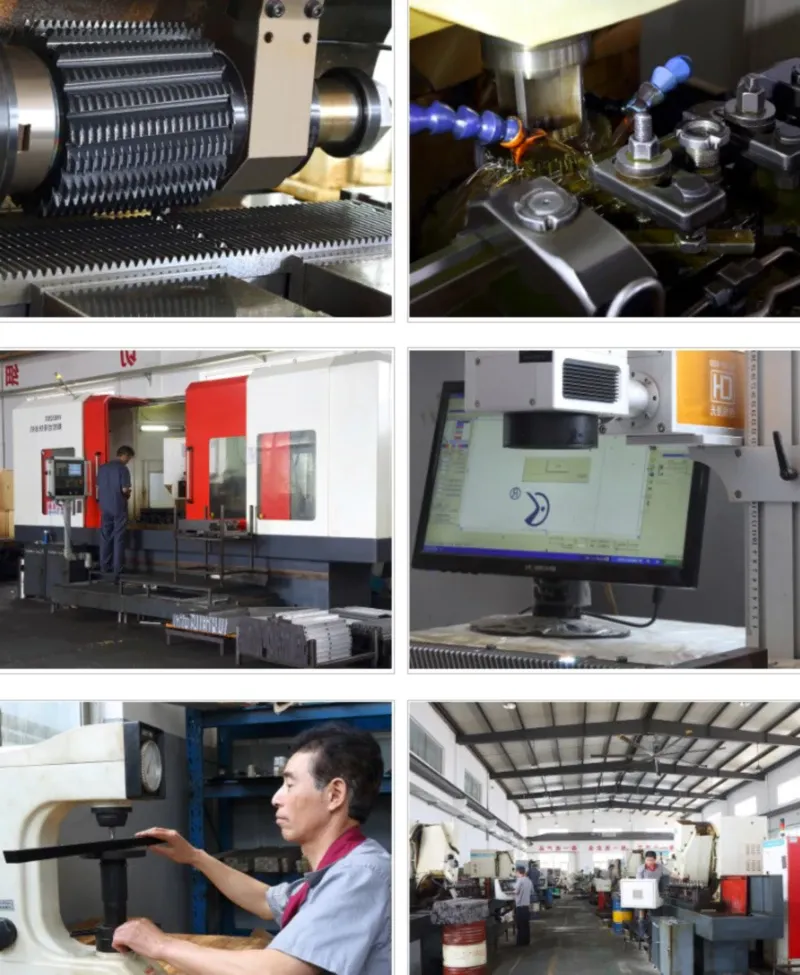
The rail industry is not a standardised world. Every rolling stock platform, every fleet upgrade, every new urban transit project arrives with its own dimensional envelope, load case, and operating environment. Ever Power’s manufacturing facility is equipped to respond to this reality with a genuine custom engineering capability that goes far beyond simply cutting standard rack stock to length.
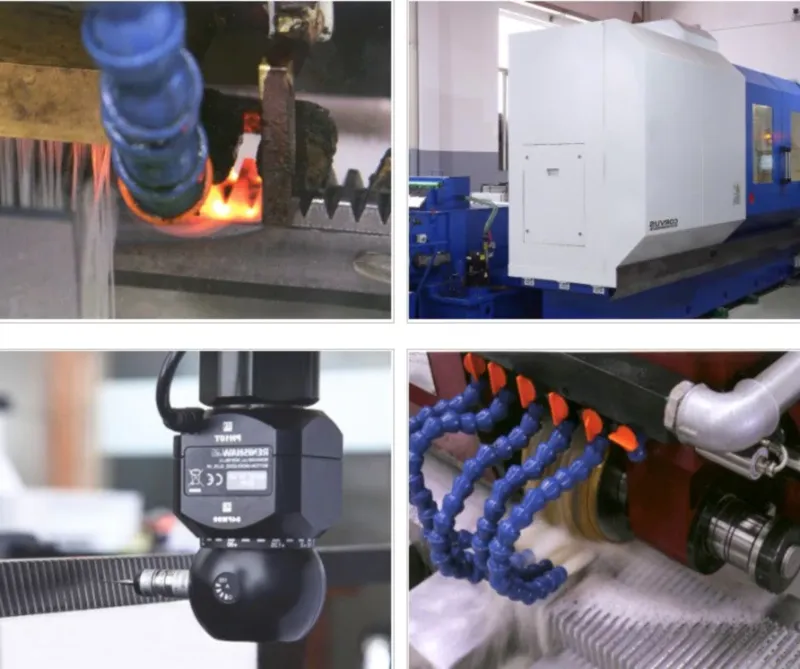
Our CNC gear hobbing machines and profile grinding centres can produce gear racks in module sizes from M1 to M20, in lengths up to 3,000 mm per section, with mounting hole patterns, keyways, surface treatments, and material grades specified entirely to the customer’s drawings. Our engineering team provides DFM (Design for Manufacture) support to optimise customer specifications for cost-effective production without compromising the structural or dimensional performance requirements.
Every custom railway rak perlengkapan produced at our facility is accompanied by full quality documentation: material mill certificates, hardness test reports, dimensional inspection records to BS EN ISO 1328 standards, and surface roughness measurements — all traceable to national and international calibration standards. This documentation package satisfies the assurance requirements of the most demanding UK railway procurement frameworks.
Maintenance Guide
Keeping Your Railway Gear Racks in Peak Condition
Planned maintenance is far less costly than unplanned failure. Here is how leading UK rail operators structure their gear rack inspection and care programmes.
Even the highest-quality railway gear racks will underperform their rated service life if maintenance protocols are inadequate. The UK’s rail maintenance culture — shaped by decades of experience and an increasingly data-driven approach to predictive asset management — recognises that gear rack inspection intervals must be tailored to the specific duty cycle of the application rather than simply applying a calendar-based replacement schedule.
Pertanyaan yang Sering Diajukan (FAQ)
Pertanyaan yang Sering Diajukan
Common questions from UK railway engineers, procurement teams, and rolling stock maintenance managers.
Ready to Source Railway Gear Racks for Your UK Project?
Share your specification with our engineering team and receive a detailed technical proposal and competitive quotation within 48 hours. Custom dimensions, precision grades, and full documentation as standard.
📧 Dapatkan Penawaran — [email protected]