Descrizione
Gear Racks for Rack Actuators: The Industrial Engineer’s Complete Guide to Precision Linear Motion
By an application engineer with 18+ years in power transmission and motion control — covering selection, performance, material science, and real-world deployment across UK industrial sectors.
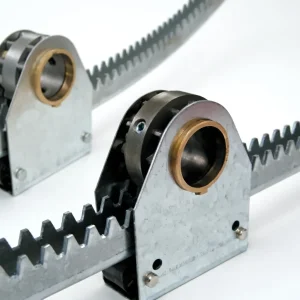
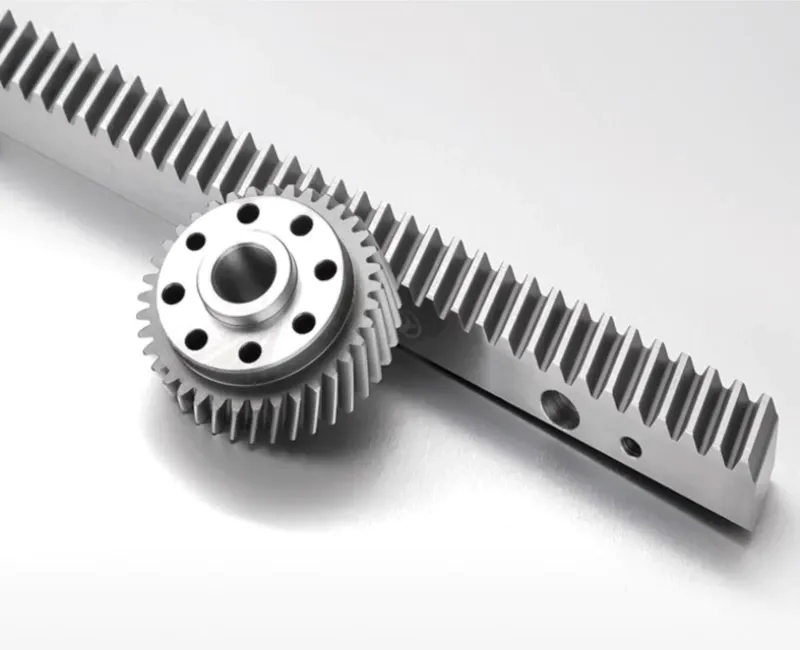 If you work in industrial automation — whether you manage a processing plant in the Midlands, operate water treatment infrastructure in Yorkshire, or commission HVAC systems across Greater London — you have almost certainly come across a rack actuator at some point. These compact, reliable devices translate rotary motor output into controlled linear travel, and at the heart of every one of them sits a deceptively simple component: the gear rack. Getting that gear rack right is not a minor detail. It determines the lifespan of the actuator, the repeatability of the stroke, and ultimately whether your process runs without interruption for years or starts generating maintenance tickets within months.
This guide draws on real-world deployment data, metallurgical principles, and application engineering experience to give you a thorough understanding of gear racks for rack actuators — from how they work and what they are made of, to how to specify one correctly for your next project in the UK market.
How a Gear Rack Works Inside a Rack Actuator
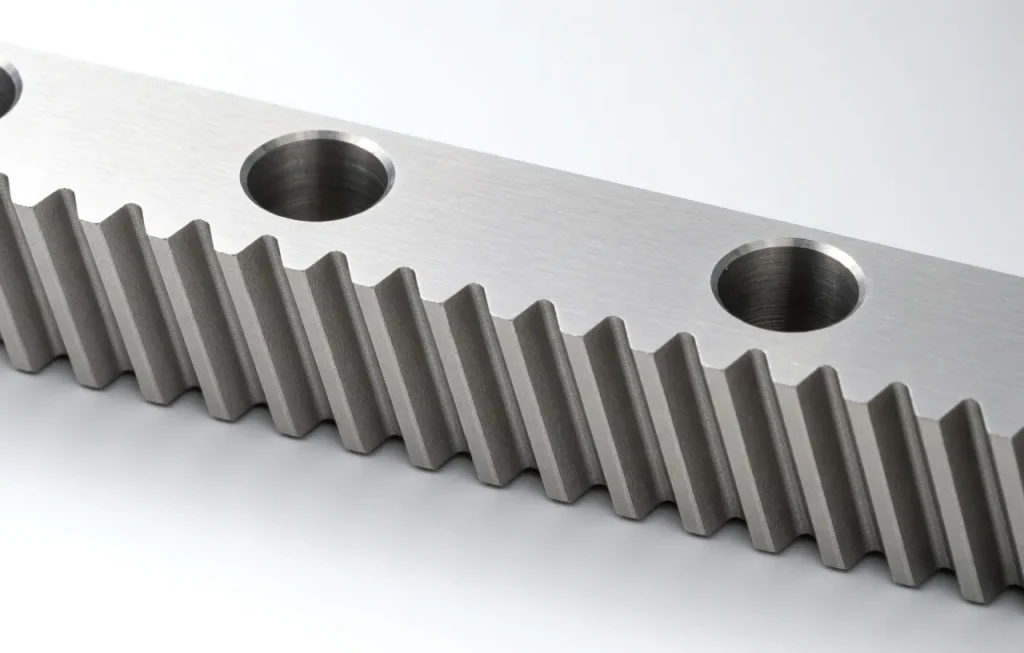
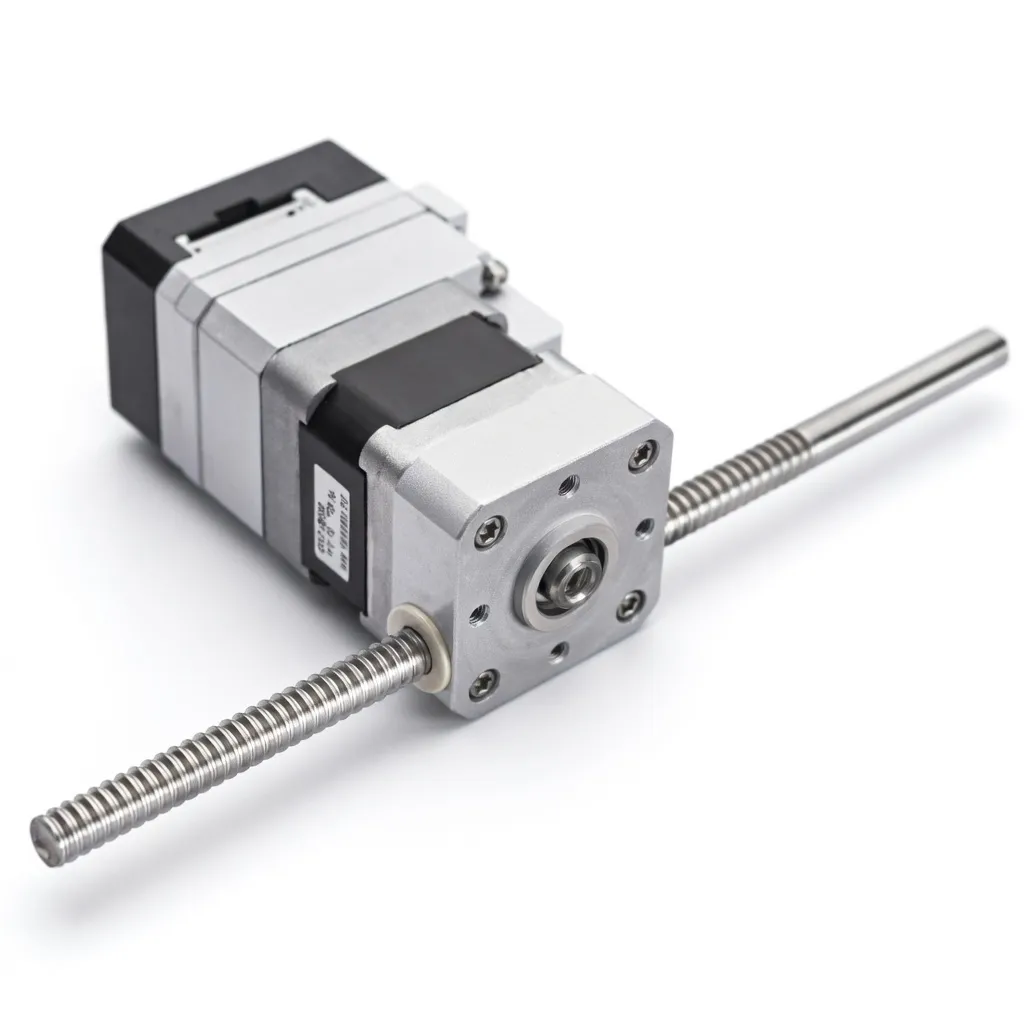
The operating principle is elegantly straightforward. A pinion gear — driven either by a pneumatic, hydraulic, or electric motor — rotates against the teeth of a linear rack. Because the rack cannot rotate (it is constrained within the actuator housing), the rotational energy of the pinion is converted entirely into linear displacement along the rack’s axis. The stroke length is therefore a direct function of the rack’s working length and the number of rotations the pinion completes. Precision in this conversion depends on tooth profile accuracy, pitch consistency, and the stiffness of the rack material.
Rack actuators used across UK processing industries typically operate under cyclic loads — a valve opens and closes hundreds of times a day, a gate lifts and descends with every batch, a damper modulates continuously in response to airflow sensors. Each of those cycles imposes a combined bending and contact stress on the gear rack teeth. A rack engineered with the correct module, hardness profile, and surface finish will absorb those stresses elastically and return to its original geometry; an undersized or poorly finished rack will begin to show micro-pitting, case fatigue, and eventual tooth flank failure within months of commissioning.
Material Science Behind High-Performance Gear Racks
Material selection is one of the most consequential decisions in rack actuator engineering, yet it is frequently treated as an afterthought. The dominant choices in UK industrial procurement are medium-carbon alloy steels — typically C45 or 42CrMo4 in the European standard designation — chosen because they strike the right balance between machinability, toughness, and surface hardenability.
C45 steel (the near-equivalent of AISI 1045 in North American terms) is the standard grade for general industrial applications. After profile milling and tooth grinding, the rack is typically induction-hardened along the tooth flank, bringing surface hardness to 50–55 HRC while the core remains at 28–35 HRC. This combination gives excellent wear resistance at the contact surface without making the part brittle through the cross-section. In demanding environments — such as offshore chemical dosing systems, steel mill automation, or food-grade processing with aggressive washdown — stainless variants (SUS304, SUS316) or engineering polymers such as PA66 with glass fibre reinforcement are substituted to handle corrosion or hygiene requirements.
For heavy-duty actuators in the water treatment infrastructure that services cities like Birmingham, Manchester, and Leeds, 42CrMo4 (equivalent to AISI 4140) is increasingly specified. The additional chromium and molybdenum content raises the hardenability index substantially, allowing larger cross-section racks to achieve through-hardness profiles impossible with plain carbon grades.
Parametri di prestazione tecnica
| Parametro | Gamma standard | Premium / Custom Range | Relevance |
|---|---|---|---|
| Modulo (m) | 1 – 8 | 8 – 32 | Determines tooth size and load capacity |
| Accuracy Grade (DIN 3962) | Grade 9 | Grade 7 | Positional repeatability in actuator |
| Durezza superficiale | 50 – 55 HRC | 55 – 62 HRC | Wear resistance and contact fatigue life |
| Core Hardness | 28 – 35 HRC | 30 – 40 HRC | Toughness under shock loading |
| Profilo del dente | 20° pressure angle spur | 20° / helical | Noise level and load sharing |
| Maximum Working Length | Up to 3,000 mm | Custom-spliced lengths | Stroke range in long-travel actuators |
| Opzioni di materiale | C45, 42CrMo4 | SUS304/316, PA66-GF, Nylon | Environment and media compatibility |
| Temperatura di esercizio | da -20 °C a +120 °C | -40°C to +250°C (special alloys) | Dimensional stability under thermal cycling |

Where Gear Racks for Rack Actuators Are Used Across UK Industries
Pipeline Valve Control
Ball valves, butterfly valves, and gate valves on oil, gas, water, and chemical pipelines across the UK rely on rack actuators for quarter-turn or partial-turn positioning. The gear rack must handle high torque at start-of-stroke when unseating tight valve seats, then resist creep under sustained line pressure. Racks specified at module 4 to 8, induction-hardened to 52 HRC with a 25 mm cross-section, are the industry norm for DN200–DN600 valves in North Sea supply infrastructure.
Water & Wastewater Infrastructure
Thames Water, Severn Trent, and Yorkshire Water rely on rack actuator systems to operate sluice gates, penstocks, and stop logs at treatment works and pumping stations. In these installations, the gear rack operates in a permanently damp or submerged environment, making material selection and surface protection critical. Stainless steel or hot-dip galvanised C45 racks with sealing gaskets on the actuator housing are standard. Proper rack specification here can extend maintenance intervals from 18 months to over 5 years.
HVAC Damper Actuation
Commercial and industrial HVAC projects across London, Birmingham, and Manchester use rack actuators to drive volume control dampers, fire dampers, and smoke extract dampers. In these applications, the gear rack typically sees low to moderate torque loads but very high cycle counts — a damper in a large commercial building might cycle 50,000 times per year. This makes wear resistance the priority rather than peak load capacity, favouring finer module racks with ground tooth flanks and consistent lubrication schedules.
Robotics & Automated Assembly Lines
UK automotive and aerospace manufacturers — particularly in the East Midlands and West Midlands manufacturing corridor — deploy rack-actuated linear axes on robotic welding cells, part transfer systems, and precision assembly gantries. Here the gear rack must deliver positional accuracy of ±0.05 mm or better over thousands of cycles daily. Ground helical racks with DIN Grade 7 accuracy and anti-backlash pinion arrangements are specified, typically in 42CrMo4 with case depths of 1.5–2 mm.
Renewable Energy & Wind Turbines
The UK’s growing offshore and onshore wind sector uses rack actuators in blade pitch control systems and nacelle orientation mechanisms. These racks operate outdoors in a corrosive North Sea atmosphere at altitudes or offshore distances that make inspection difficult. Heavily sealed 42CrMo4 racks with zinc-phosphate primer and fluoropolymer topcoats, combined with centralised lubrication systems, are becoming the standard specification on UK wind farm projects developed under the Crown Estate leasing framework.
Material Handling & Logistics
Distribution centres, port logistics facilities, and automated warehouses across Felixstowe, Tilbury, and the East Midlands logistics triangle increasingly rely on rack-actuated systems for pallet transfer, stacker crane travel axes, and sorting gate mechanisms. Load capacity is the key parameter here — racks are often sized to handle dynamic impact loads significantly greater than the rated static payload when pallet loads are transferred at speed.
Selection Guide: Matching the Gear Rack to Your Actuator Requirements
The single most common specification mistake seen in the field is selecting a gear rack module purely on size availability rather than calculated tooth root bending stress. Module selection must start with the applied tangential force, which is derived from the actuator output torque divided by the pinion pitch radius. From that tangential force, Lewis bending stress equations (or ISO 6336 for high-duty applications) give the minimum module required for the chosen material and face width.
| Selection Factor | What to Check | Common Mistake |
|---|---|---|
| Actuator compatibility | Match rack module and tooth form to the actuator’s pinion spec | Ordering a rack by physical length without checking pinion module |
| Capacità di carico | Calculate tangential force from actuator torque + pinion radius | Using static load rating without a dynamic load factor |
| Stroke length | Add at least 20% overrun to working stroke for end-stop protection | Sizing rack exactly to nominal stroke, allowing no margin |
| Environment | Check IP rating, chemical compatibility, and temperature range | Specifying carbon steel for outdoor or washdown environments |
| Accuracy requirement | Confirm required positional tolerance vs DIN grade achievable | Specifying high-accuracy grade for a simple open/close application |
Installation, Commissioning, and Maintenance Best Practices
Even a correctly specified gear rack will fail prematurely if it is installed carelessly. The most critical installation parameter is backlash — the clearance between the pinion tooth flanks and the rack tooth flanks at the operating centre distance. Too little backlash creates overloading and thermal seizure; too much introduces positional error and accelerated impact wear. For standard actuator applications, backlash of 0.05–0.15 mm (for modules 2–5) and 0.10–0.25 mm (for modules 6–12) is the accepted working range.
After installation, check that the rack slides freely through its full travel without binding. Any tight spots indicate misalignment of the actuator housing relative to the rack guide, which will concentrate wear at that point. In pneumatic rack actuators common across UK process plants, the end caps should be torqued to specification and the air ports pressure-tested at 1.5 times working pressure before the actuator is connected to the control system.
For maintenance, the key intervals are: visual inspection of tooth flanks for pitting or burring at 6-month intervals; relubrication with NLGI Grade 2 lithium-based grease every 12 months (or 500,000 cycles, whichever is sooner); and full rack replacement at first signs of pitch line wear exceeding 0.2 mm on the tooth flank. Catching wear early and replacing the rack before the pinion is damaged saves significant cost — a rack is a fraction of the price of a new pinion and housing assembly.
Customer Success Story
CASE STUDY — UK Water Treatment Sector
A major water utility operating a network of treatment works across the East of England was experiencing recurring rack actuator failures on its inlet penstock control systems. The original portautensili, sourced from a domestic supplier, were failing at 18–24 months — well below the 7-year replacement target written into the framework contract. An audit identified two root causes: the racks were supplied in plain C45 with only a painted finish (no induction hardening), and the module had been undersized to reduce initial procurement cost.
Working with Ever-Power, the utility respecified the racks in 42CrMo4 steel, induction-hardened to 54 HRC on the tooth flanks, with hot-dip galvanised side faces and a module increase from 4 to 6. The respecified racks were installed across 36 penstock actuators at four treatment sites. Eighteen months later, zero tooth failures had been recorded. The estimated saving over the 7-year framework — factoring in avoided downtime, avoided emergency procurement, and reduced maintenance labour — was calculated at over £340,000.
“We had tried two other suppliers and the problem kept coming back. Ever-Power’s engineering team did a proper stress analysis before recommending a specification change. That made all the difference.”
— Mechanical Engineer, Water Utility, East Anglia, UK
“Lead time on bespoke racks can be a challenge in this industry. Ever-Power delivered a batch of 42 custom-length racks in under four weeks, which allowed us to meet our planned shutdown window.”
— Procurement Manager, Process Engineering Firm, Birmingham, UK
“The quality of the tooth grinding on the helical racks we ordered for our assembly line gantry system was noticeably better than what we had been using. Backlash was within tolerance straight out of the box.”
— Automation Systems Integrator, East Midlands, UK
Manufacturing & Custom Engineering Capability at Ever-Power
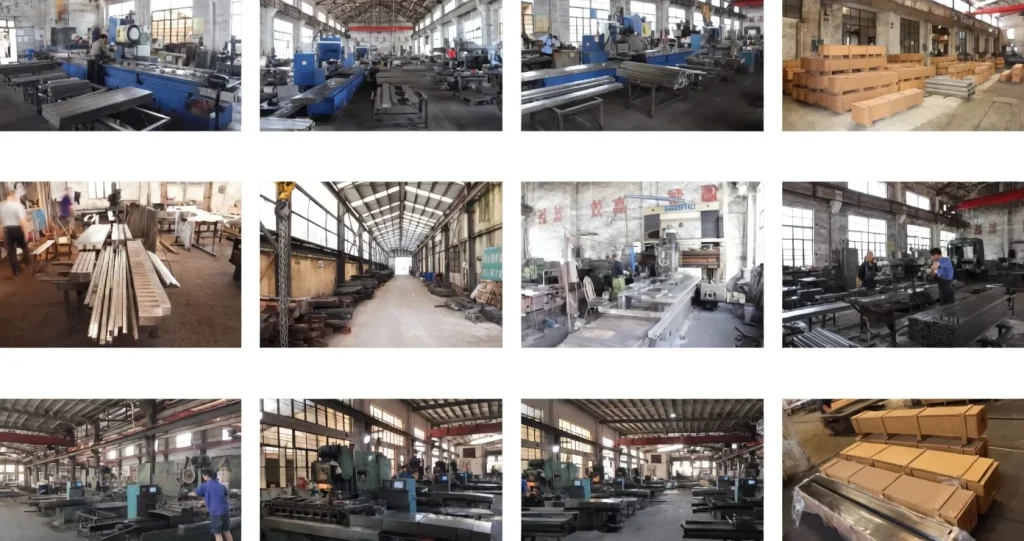 Hangzhou Ever-Power Transmission Co., Ltd operates a fully integrated gear rack production facility equipped with 30 fully automatic CNC rack-specific machine tool assembly lines. The facility produces metric gear racks from module 1 through to module 32, covering standard spur racks, helical racks, double-sided racks, and cylindrical racks, all produced to DIN accuracy grades 7 through 9. Fixed assets exceed 20 million RMB and annual output capacity surpasses 50 million RMB — a scale that underpins both competitive pricing and consistent on-time delivery to customers across Western Europe, the Middle East, and Southeast Asia.
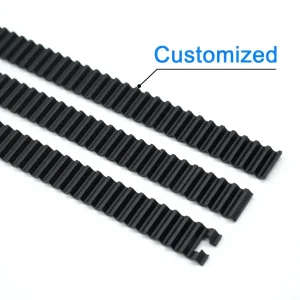
What sets Ever-Power apart for UK procurement teams is the company’s genuine custom engineering service. The team can work from a customer’s CAD drawing, a broken sample, or simply a set of application requirements — load, stroke, environment, actuator type — and return a fully engineered rack specification within 48 hours. Non-standard tooth forms, unusual cross-section profiles, special drilling patterns for mounting bosses, and hybrid material constructions (for example, a steel rack with nylon insert guides) are all within scope. Batch sizes from 1 prototype to 5,000 production pieces are handled with equal attention to quality, supported by a full set of precision measuring instruments including optical projectors and 16-station in-process monitoring systems.
Domande frequenti
Ready to Source Gear Racks for Your Rack Actuator Application?
Tell us your module, stroke length, load requirements, and operating environment. Our engineering team will respond with a specification recommendation and competitive quote within 48 hours.
modifica di gzl